
Last updated October 15, 2026
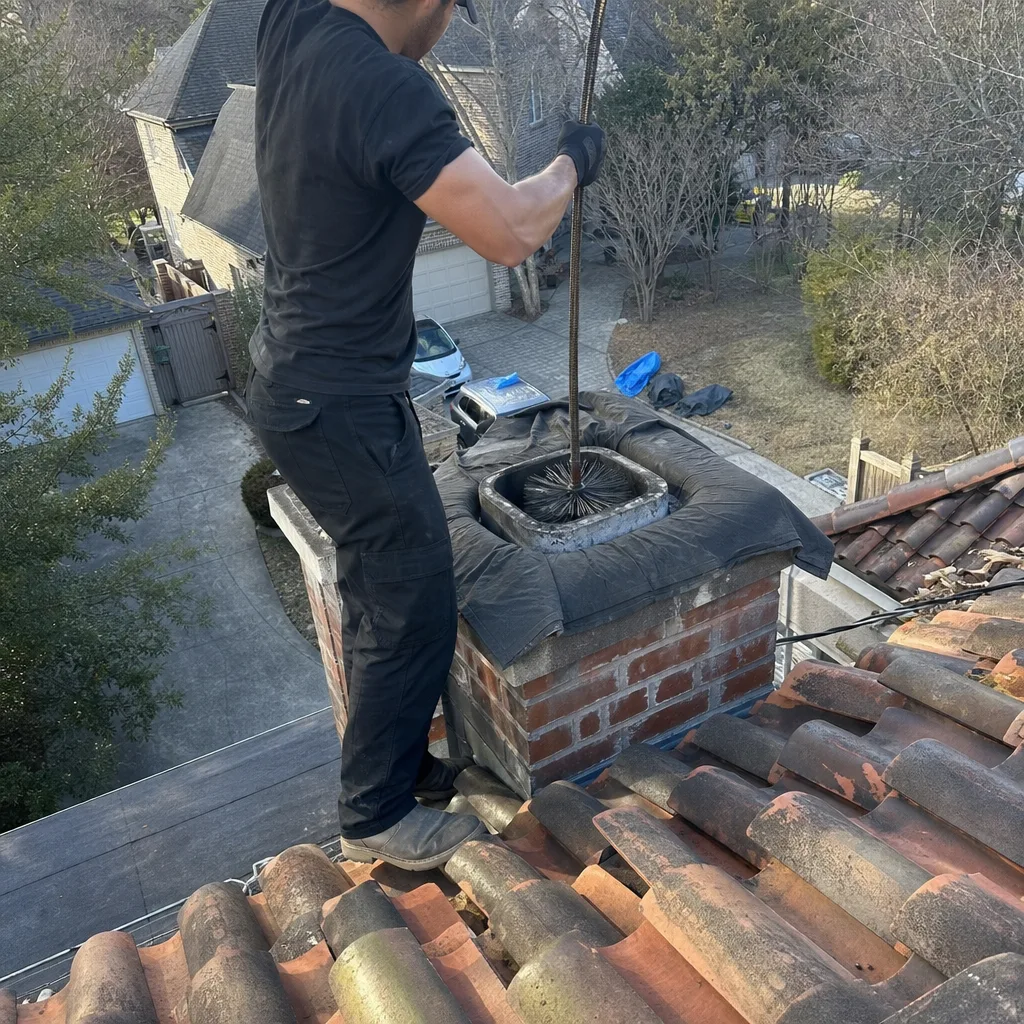
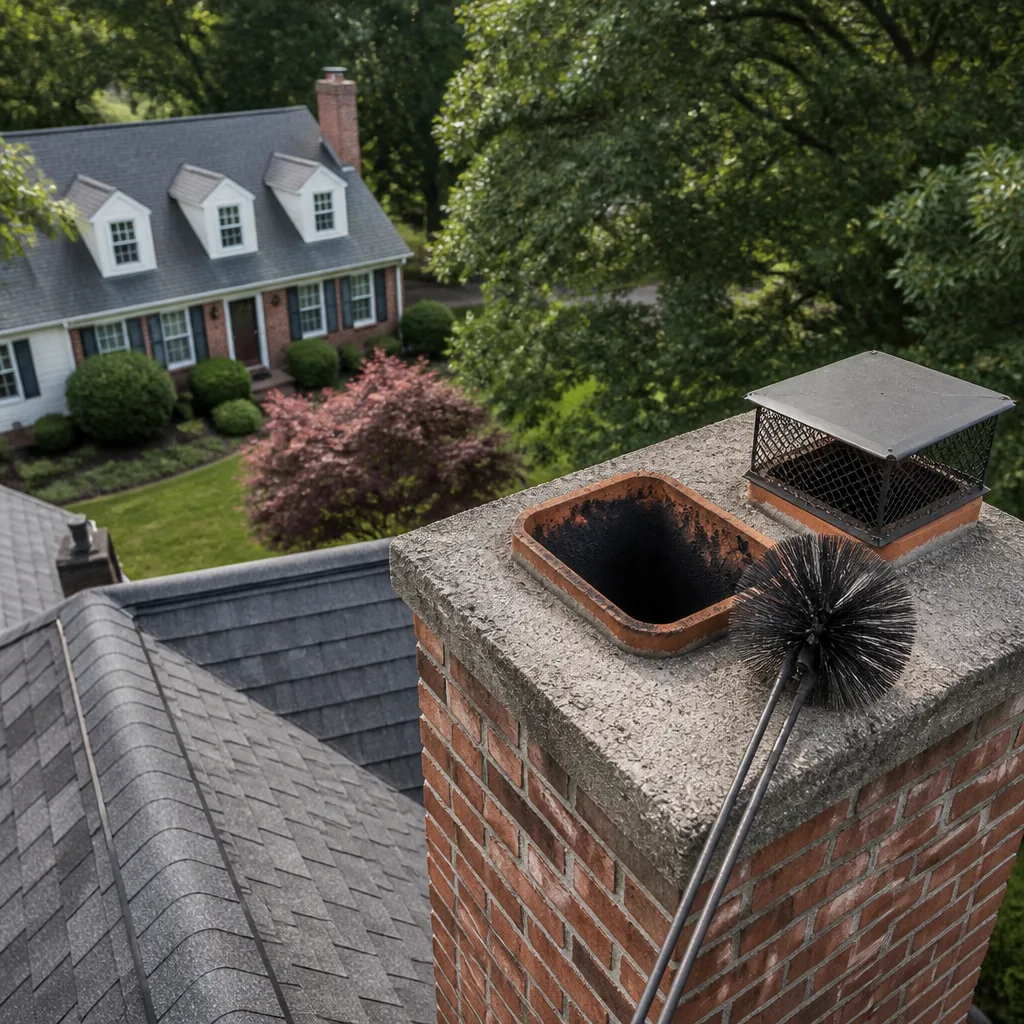 Sweep & inspection
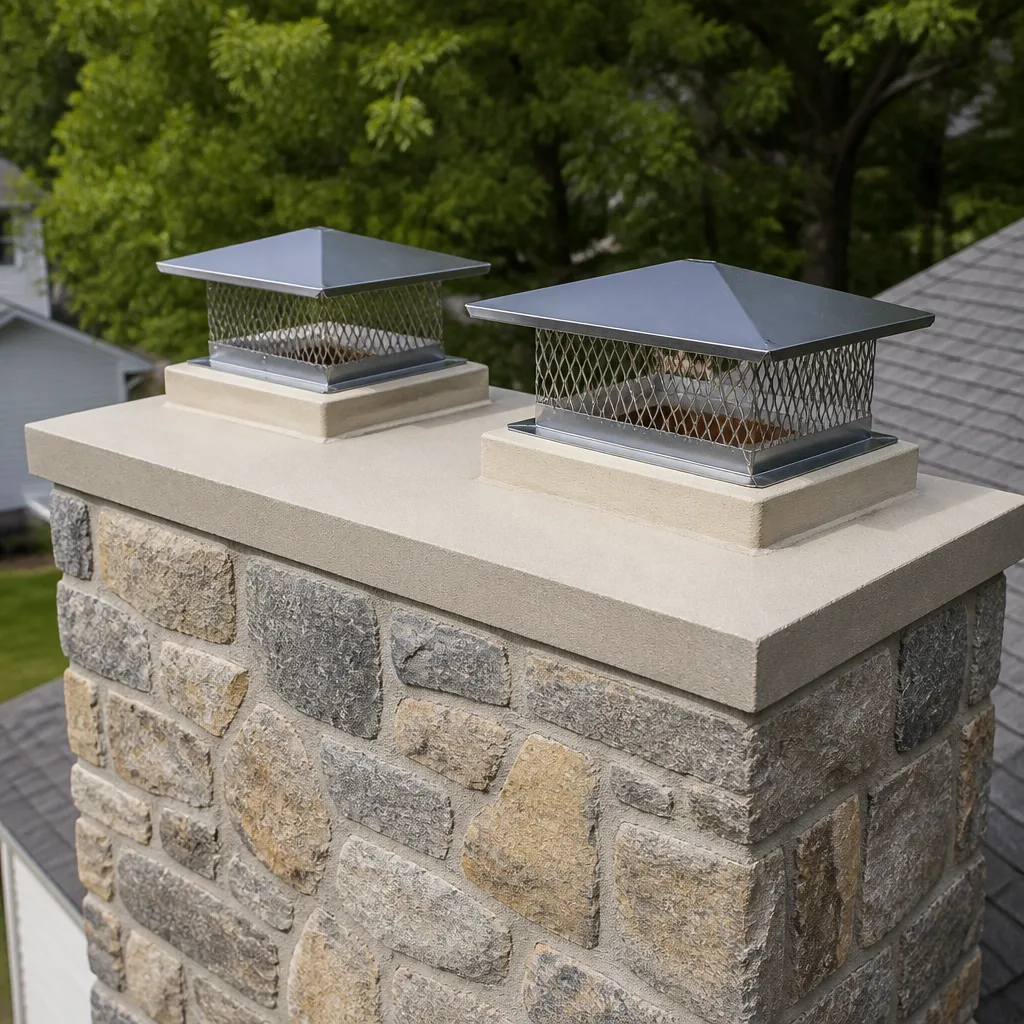 Caps & crowns
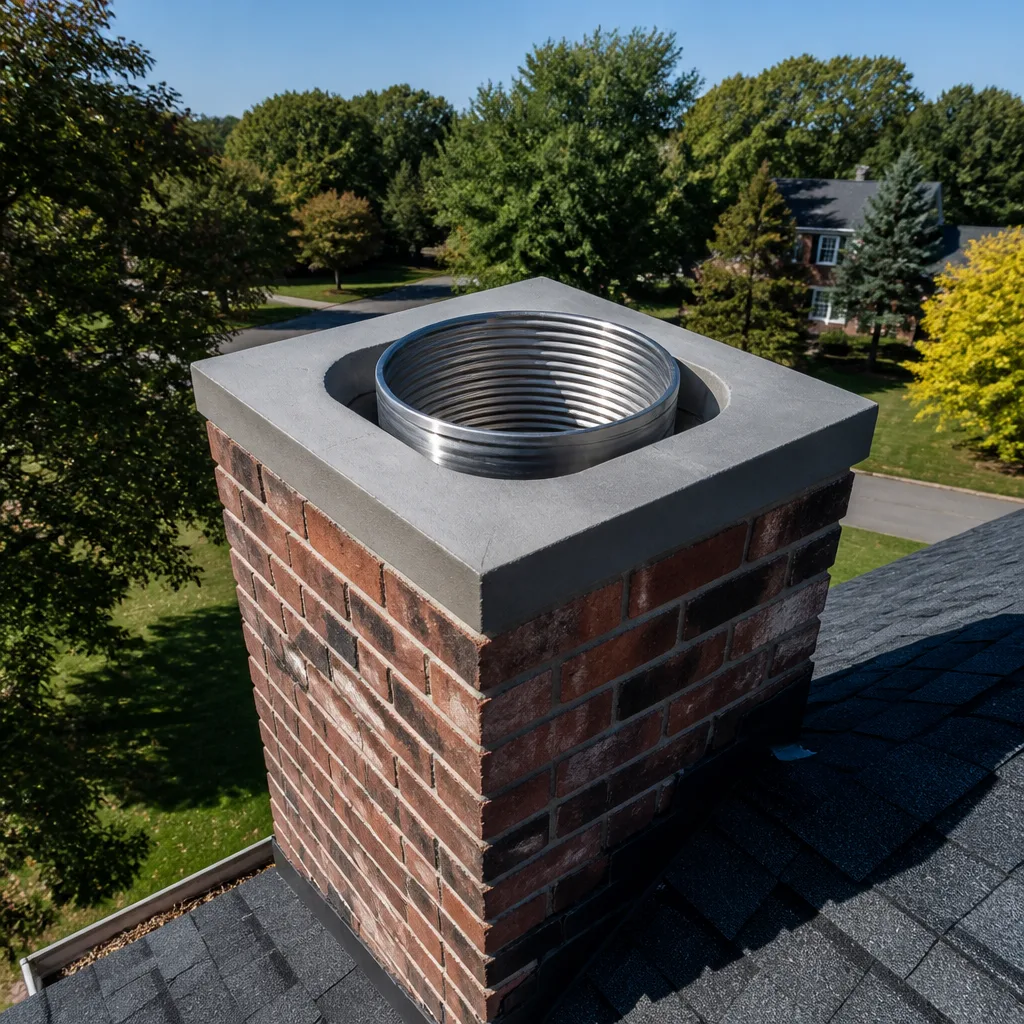 Flue relining
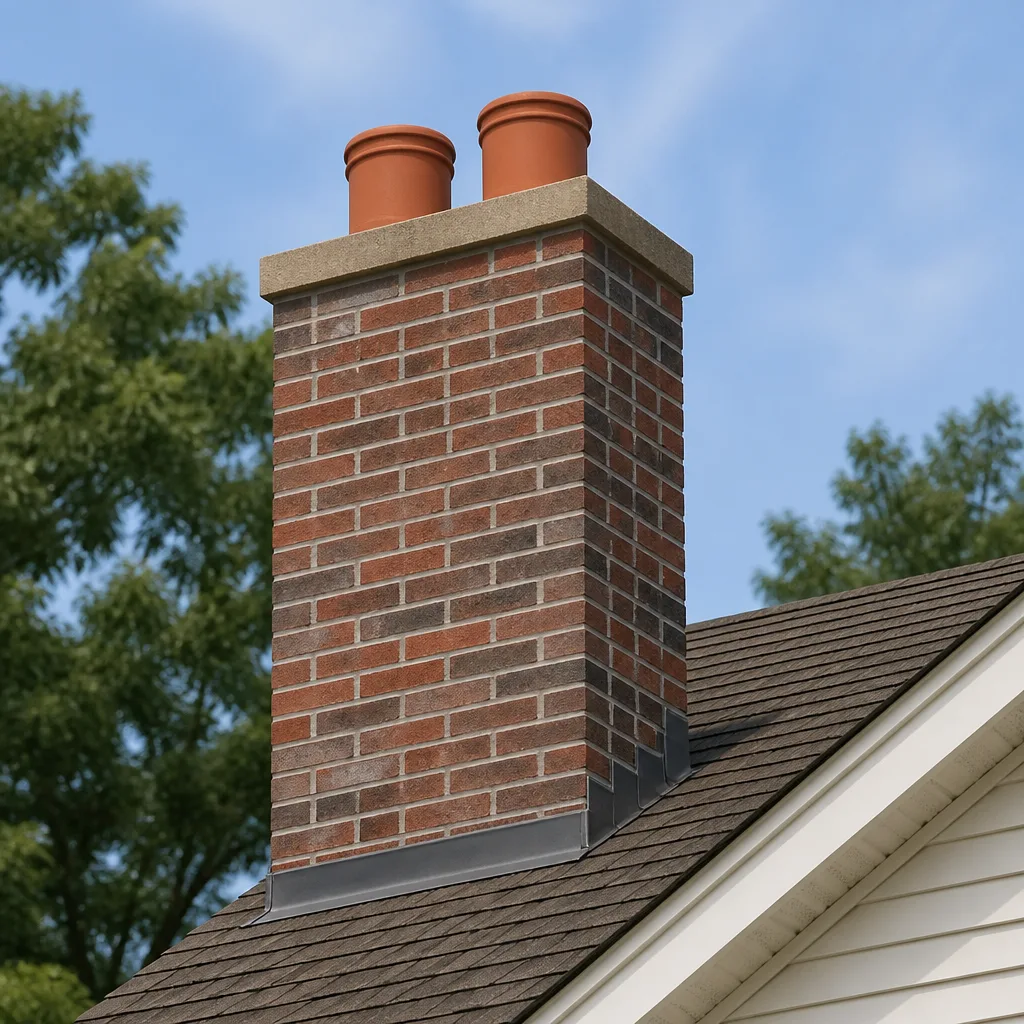 Masonry repair
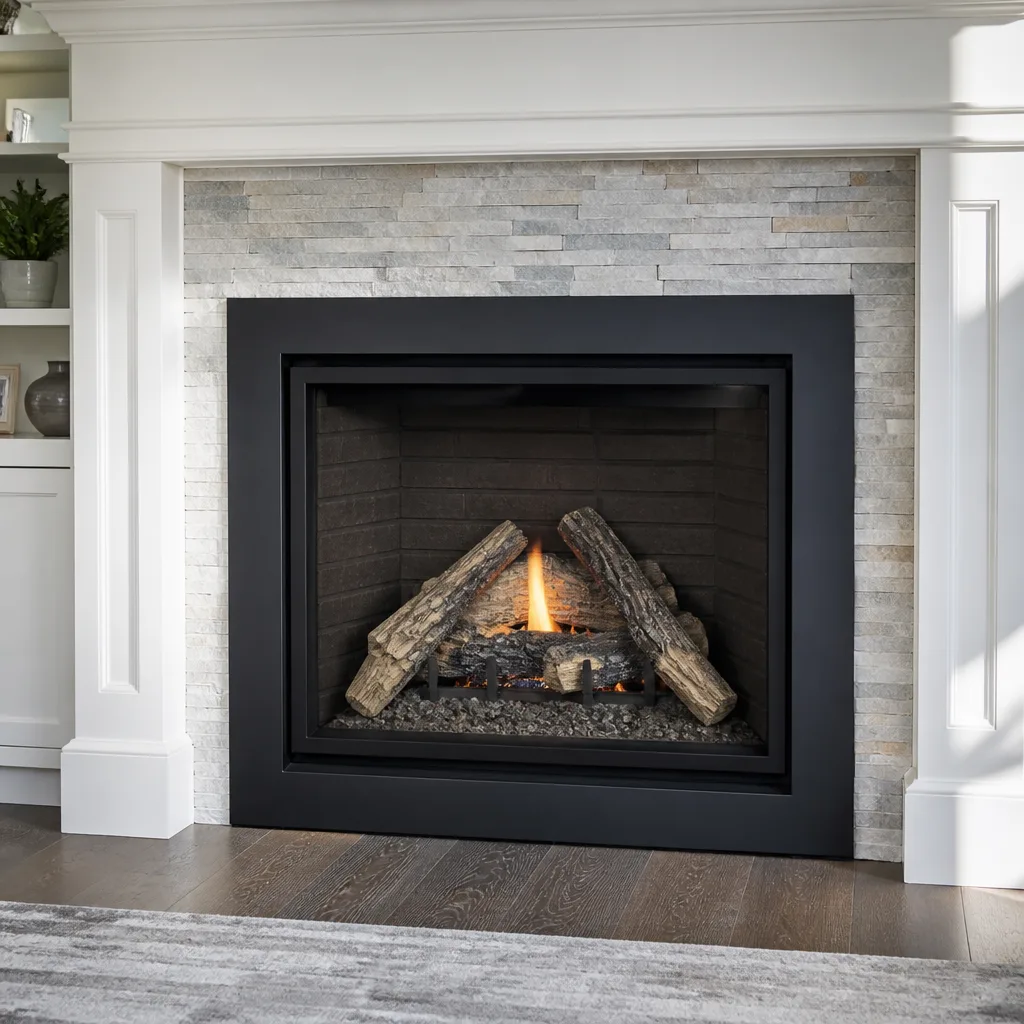 Gas fireplace service
Level 1 sweep and inspection to the NFPA 211 annual standard - flue, crown, cap, and flashing checked and photographed
Chimney sweep logs do not sweep chimneys. They loosen some creosote - which then falls where a brush and vacuum still have to collect it.
DIY vs Professional Chimney Cleaning: The Atlanta Homeowner’s Decision Guide
Every fall, Atlanta hardware stores sell thousands of $45 chimney brush kits to homeowners who are told the job is simple: shove a brush up the flue, pull it down, done. What those kits never mention is that a straight flue with light soot is the only scenario where that actually works. Your chimney may have a cracked clay tile liner, a smoke chamber with creosote packed above the damper, or a cap quietly funneling water into your crown. The brush will pass right by all of it and leave you thinking you’re safe. This guide draws the real boundary between what an Atlanta homeowner can legitimately handle and what requires a trained professional with inspection equipment, because that boundary is narrower and more specific than the internet would have you believe. For more guides & resources, visit our blog.
Quick Answer
DIY chimney cleaning is appropriate in exactly one situation: a straight, unlined or clay-tile-lined flue with light, fluffy soot (not glazed or tar-like creosote) in a single-story home with safe roof access and no existing damage. Everything beyond that, including any creosote stage 2 or higher, any signs of liner damage, any smoke chamber buildup, or any gas appliance venting through the same flue, is professional territory. Most Atlanta homeowners learn which situation they’re in only after they’ve spent the money on tools and climbed onto the roof.
Styles & brands we work with
Table of Contents
- The One Scenario Where DIY Cleaning Is Actually Appropriate
- What a Brush Cannot Do: The Anatomy of a Real Inspection
- The Real Cost of DIY vs Professional Cleaning in Atlanta
- Insurance and Warranty Implications of DIY Chimney Work
- How a Professional Sweep Documents What It Finds
- Creosote Stages: What Builds Up in Atlanta Flues
- Atlanta-Specific Factors: Climate, Code, and Construction
- How to Evaluate a Professional Post-Service Report
The One Scenario Where DIY Cleaning Is Actually Appropriate
Let’s be precise, because most guides either say “never do it yourself” or “anyone can do it” and both are wrong. You can reasonably clean your own chimney if you meet every single condition on this list:
- Straight vertical flue with no offset. If you can look up from the firebox and see daylight, the geometry is simple enough for a brush. If the flue bends anywhere, a brush will miss the curve entirely.
- Light, first-stage creosote only. This means fluffy, grayish, sooty dust that wipes off with a finger. Anything that looks like shiny black tar, cracked glaze, or dark hardened puddles is stage 2 or stage 3 creosote and requires chemical treatment plus rotary tools, not a wire brush.
- Single-story home with a roof pitch of 6/12 or less. Anything steeper, and you need fall protection and roof brackets. The emergency room visit for a ladder slip costs more than a professional sweep.
- An unlined or clay-tile-lined masonry chimney built after 1960. Older unlined chimneys or chimneys with unknown history should not be DIY’d. A brush can knock loose mortar joints in a pre-1960 flue and create a fire hazard where none existed before.
- Wood-burning fireplace only. No gas logs, no gas water heater vent, no furnace sharing the flue. Gas appliances produce different combustion byproducts and share flues in ways that require special evaluation. Messing with a flue shared with a gas appliance can backdraft carbon monoxide into the house.
- Existing cap, crown, and flashing in visibly good shape. If you see cracks in the crown mortar, rusted flashing, or a missing spark arrestor, the situation already exceeds what a brush can fix.
If you can confidently check all six boxes, a DIY sweep of light soot is a reasonable weekend project, assuming you have a proper chimney brush sized to your flue (not a generic one-size-fits-all), a shop vacuum with a HEPA filter, drop cloths, and a dust mask rated for fine particulate. In our experience across Atlanta neighborhoods from Buckhead to Decatur, fewer than one in ten chimneys we see falls into this narrow category. Most have at least one disqualifying factor, and the owner doesn’t know it until someone puts eyes on the flue.
What a Brush Cannot Do: The Anatomy of a Real Inspection
It’s helpful to understand exactly what professional equipment detects that a brush from Home Depot will not. The brush removes loose material. The professional identifies threats. Here’s what a legitimate Chimney Sweep in Atlanta brings that no DIY kit replicates:
- Video scan camera. A waterproof, high-resolution camera that goes the entire length of the flue, recording everything in real time. This is the only way to see a hairline crack in a clay tile liner, a separated tile joint, or creosote that has liquefied and re-solidified behind an obstruction. The brush will never tell you that your liner is cracked. The camera will, and the footage is yours to keep.
- Rotary whip system. A spinning chain or cable head driven by a drill that breaks up stage 2 and stage 3 creosote, the tar-like glaze that a brush cannot penetrate. Attempting to scrub glazed creosote with a hand brush just polishes the surface, which makes it look cleaner while leaving the flammable layer intact beneath.
- Draft measurement tools. A manometer or smoke pencil to verify that the flue actually pulls smoke upward instead of spilling it into the room. This matters especially in Atlanta, where summer humidity and warm winter days create weak draft conditions in exterior masonry chimneys.
- Smoke chamber evaluation. The smoke chamber is the inverted funnel section above the damper that tapers into the flue. This area collects creosote that a brush on a pole, running up the flue from the top, will never reach. In fact, most DIY brush kits are designed for the flue only and skip the smoke chamber entirely.
- Level 2 inspection tools. Mirrors, high-intensity lights, and specialized probes that comply with the National Fire Protection Association’s NFPA 211 standard. The NFPA Level 2 inspection, which involves video scanning, is required by most home insurers after a chimney fire or a property transfer. A homeowner armed with a brush cannot perform this.
To put it bluntly: the brush confirms what you already hoped was true. The camera tells you what’s actually there. And in Atlanta, where homes range from 1920s bungalows in Inman Park to 1990s colonials in Sandy Springs, what’s actually there is often decades of deferred maintenance hiding behind a clean-looking flue opening.
The Real Cost of DIY vs Professional Cleaning in Atlanta
Let’s get the money question answered directly. A professional chimney sweep in Atlanta typically costs between $180 and $340 for a standard open-flue masonry fireplace with no significant creosote buildup or repairs needed. That price includes the sweep, the disposal of removed material, and at minimum a Level 1 visual inspection of the accessible portions of the chimney. Alcott Chimney Atlanta quotes within this range and provides a written price before any work begins, so the number you’re quoted is the number you pay.
Now let’s price the DIY path honestly, including what most articles leave out:
- Chimney brush kit with rods: $40-$70 for a basic wire brush set. Sizing is specific: the brush must match your flue dimensions, and a wrong-sized brush either jams or does nothing.
- HEPA shop vacuum: $100-$300 if you don’t already own one. A standard shop vac without a HEPA filter will blow fine soot out the exhaust port and coat your living room in black dust.
- Dust containment supplies: $30-$60 for plastic sheeting, drop cloths, painter’s tape, and a quality respirator (not a paper dust mask).
- Roof safety gear: $0-$150 depending on whether you already have a harness, roof anchors, and a stable extension ladder. Most homeowners need to buy or rent at least the ladder.
- Time: First-time DIY sweeps in Atlanta typically take 4 to 6 hours including setup, roof access, cleaning, multi-floor containment, and cleanup. Your time has value. If you bill anything for it, this is the largest line item.
The all-in cost for a first-time DIY sweep lands between $170 and $600, depending on what you already own. When you factor in the video inspection you are not getting, the warranty you are not getting, and the insurance coverage you are not getting (covered below), the “savings” often evaporate to zero. A professional sweep is not $300 more expensive than DIY; it is frequently cheaper than the full cost of a properly equipped DIY attempt.
Insurance and Warranty Implications of DIY Chimney Work
This section matters more than most homeowners realize, and almost no DIY chimney guide covers it. Here’s what happens after a chimney fire, water damage claim, or carbon monoxide incident at an Atlanta home where the chimney was self-cleaned:
- The insurance adjuster asks who performed the last cleaning and inspection. If the answer is “I did it myself,” the claim enters a review process that is not routine. Homeowners policies generally require that maintenance be performed in accordance with manufacturer and industry standards. NFPA 211, the national standard for chimneys and vents, presumes professional inspection and cleaning practices. A homeowner cannot claim to have met a standard they were not trained to follow and have no record of meeting.
- The burden of proof shifts. If a chimney fire starts because creosote ignited, the claim is evaluated as a potential maintenance failure. A professional sweep provides documentation: a dated report, photographs, video footage, and a written service record. A DIY job provides none of that. You would be asking the insurer to trust that you did a thorough job, which is not how claims adjustment works.
- Warranty on the liner or fireplace is voided. Many liner manufacturers, including the professional brands we install like DuraFlex, require that the chimney be swept and inspected by a qualified professional on a documented schedule as a condition of the warranty. Self-cleaning, even if done carefully, can void this coverage. The same applies to gas fireplace units from manufacturers who specify professional service for any work involving the venting system.
- Resale disclosure becomes complicated. Georgia property disclosure forms ask about known defects, but they also open the door to questions about maintenance history. “I cleaned the chimney myself” is not a reassuring answer for a buyer’s inspector, and it can become a negotiation point at closing.
This is not to say that every DIY sweep ends in denied claims and voided warranties. It is to say that the insurance and warranty exposure is a real, documented risk that should be priced into your decision. The professional invoice is, in part, a piece of risk management documentation that you keep on file.
How a Professional Sweep Documents What It Finds
If you hire a professional, you should expect more than a clean flue. You should expect a documented report that tells you things you could not have learned any other way. Here are the steps a legitimate Atlanta chimney company follows, and what each step produces:
- Pre-service interview. The technician asks about the home’s history: when the chimney was last used, whether there have been odors, smoke incidents, or animal activity. This context shapes the inspection.
- Exterior evaluation from the roof. The technician checks the cap, crown, flashing, and brick or stone condition before ever putting a brush in the flue. Water intrusion through a cracked crown or failed flashing is the most common cause of expensive chimney repairs in Atlanta, where spring thunderstorms and summer humidity are relentless.
- Firebox and damper evaluation from inside. The damper is checked for operation, rust, and seal. The firebox refractory panels are tapped for cracks. The smoke chamber is inspected, which is the area most DIY cleanings completely miss.
- Sweep using brushes, rods, or a rotary system sized to the specific flue dimensions of the home, whether that’s a 1920s brick chimney in Grant Park or a fabricated chimney on a 2005 build in Milton.
- Post-sweep video scan through the entire flue with a camera that records everything. This confirms the flue is clean and documents the condition of the liner in real time. You receive access to this footage.
- Written report with photographs and findings. The report notes any creosote stage observed, any liner cracks or spalling, any water damage, any animal nesting material, and any clearance-to-combustibles issues. If repairs are recommended, the report explains what was seen, where, and why it matters. Nothing is recommended that cannot be justified with camera evidence.
This is the standard a professional inspection should meet. If a company charges $99 for a sweep and hands you a one-line receipt, you got what you paid for, and you did not get an inspection. The Chimney Inspection in Atlanta that Alcott performs includes the camera scan and the written report as standard, not as an upsell. If a technician recommends a liner replacement, you will see the crack or separation on video before you’re asked to spend a dollar.
Creosote Stages: What Builds Up in Atlanta Flues
Most homeowners have heard that creosote is dangerous but don’t know there are distinct stages, and that the stage of creosote determines whether a brush is even remotely useful. Here’s the plain-English breakdown:
- Stage 1 (soot/light creosote): Fluffy, gray or brown, dusty, easily removed with a brush. This is the natural byproduct of complete combustion in a hot, efficient fire. A chimney with only stage 1 creosote, in an otherwise sound structure, is the narrow scenario where DIY cleaning is possible.
- Stage 2 (tar-like creosote): Shiny, black, flaky or bubbled, more concentrated. This forms when flue temperatures are lower, which happens in Atlanta with our relatively mild winters and the common habit of building small, smoldering fires in oversized fireplaces. Stage 2 requires a rotary whip with metal chains or a chemical treatment plus mechanical removal. A hand brush will not remove it.
- Stage 3 (glazed creosote): Hard, baked-on, glass-like coating that forms when stage 2 is repeatedly heated and cooled over multiple seasons. This is a serious fire hazard. Glazed creosote burns at high temperatures once ignited, and a chimney fire burning stage 3 creosote can spread to the house structure. Removal often requires chemical treatments like Gelco creosote remover, followed by rotary cleaning, and sometimes a second visit to complete the job.
The hard truth for Atlanta homeowners is that our climate produces a lot of stage 2 and stage 3 creosote. Mild winters mean homeowners build small fires, which burn cooler, which produces more concentrated creosote. The fireplace is opened for ambiance four or five times a season, never fully heating the flue, and each use adds a layer. By the time five or six years pass without cleaning, the flue can have a serious glaze that a weekend warrior with a brush cannot touch.
Atlanta-Specific Factors: Climate, Code, and Construction
Atlanta is not a generic market, and the advice that applies to a homeowner in Chicago or Phoenix does not automatically apply here. Here’s what makes chimney work in Atlanta distinct:
- Humidity and rain drive water damage, not just fire risk. Atlanta averages roughly 50 inches of rain per year, and that water tests every chimney crown, cap, and flashing joint. Cracked crown mortar lets water into the brick and mortar, where freeze-thaw cycles, even our mild ones, cause spalling (the brick face popping off). A professional sweep includes an exterior evaluation because in Atlanta, water intrusion is a more common and expensive problem than creosote buildup.
- Mild winters produce cooler fires and more creosote. As covered above, the typical Atlanta fireplace is used sporadically in a mild climate, producing lower flue temperatures and faster creosote accumulation. The homeowner who burns two fires a month from November through February is often building stage 2 creosote without realizing it.
- Older housing stock means varied flue conditions. Atlanta’s intown neighborhoods, from Virginia-Highland to East Atlanta to the West End, contain thousands of pre-1970 homes with unlined or clay-tile-lined chimneys. Clay tile cracks over time. The only way to know is to run a camera, which is precisely what a professional sweep includes and a DIY brush kit does not.
- Georgia code and NFPA standards apply. While Georgia does not have a unique chimney inspection mandate beyond the national NFPA 211 standard, local permitting and home insurance requirements in metro Atlanta are increasingly strict about documented maintenance for any home with a wood-burning fireplace. An annual inspection record is worth more every year as insurers in the region tighten underwriting.
- Gas fireplace service is often tied to the same flue system. A significant percentage of Atlanta homes have gas logs or gas fireplaces, many of which vent through the same chimney as a former wood-burning setup. If you have a gas appliance venting through your chimney, do not DIY anything involving that flue. The stakes include carbon monoxide, and the correct service path is a professional Gas Fireplace Repair in Atlanta technician who understands both the appliance and the venting.
These factors together mean that the Atlanta homeowner operating on generic internet advice is operating without the information that actually matters here. The flue may look fine from the firebox. The issues are up on the roof, in the crown, behind the damper, and inside the smoke chamber.
How to Evaluate a Professional Post-Service Report
When the sweep is done, you should receive a written report. How do you know the technician did more than a homeowner with a brush could have done? Here’s what to look for:
- Video or photographic evidence. If the company recommends any repair, and the word “liner” or “crack” appears, you should be able to see it. A company that cannot show you the problem is a company you should not pay for the solution. This is the entire point of a camera-equipped sweep.
- Specific creosote stage referenced, not generic “buildup.” The report should say stage 1, stage 2, or stage 3, and should explain what that means for your next cleaning interval. If the report just says “chimney was dirty,” ask what was removed and at what thickness and at what location.
- Smoke chamber mentioned at all. A large percentage of sweeps performed with basic equipment never address the smoke chamber because it’s harder to reach and requires specific tools. If the report does not mention the smoke chamber, ask whether it was inspected. In our experience, smoke chamber creosote is one of the most commonly missed problem areas in Atlanta chimneys.
- Exterior notes on crown, cap, and flashing. The report should include a note on the condition of the outside of the chimney, even if the note is “no issues observed.” If there is no exterior mention, the technician may not have evaluated the roof side at all.
- Clear recommendation on next service date. Based on what was found and how you burn, you should get a specific recommendation: “annual cleaning recommended based on stage 2 creosote present” or “every other year is fine given current usage.” If you get no interval, ask.
Alcott Chimney Atlanta provides a written report with photographs and video access on every inspection. If we recommend a repair, you’ll see the evidence before you see a price. That’s not a sales tactic; it’s the minimum standard for a chimney company that expects to be trusted. This standard exists because we’ve spent over two decades in Atlanta homes, and we know what gets missed when nobody is looking.
Common Mistakes to Avoid
- Using a brush that’s the wrong size for the flue. A brush too large jams and can pull clay tiles loose. A brush too small pushes the creosote around without removing it. Flue dimensions are specific, and the brush must match them.
- Skipping the smoke chamber because it’s hard to reach. The smoke chamber is the most commonly missed creosote accumulation point in Atlanta chimneys. If your cleaning doesn’t address it, you haven’t cleaned the whole system.
- Using chemical creosote logs instead of actual removal. Creosote sweeping logs can loosen stage 1 and early stage 2 deposits, but they do not remove them. They make the buildup easier to knock down, which is useful as a pre-sweep treatment but worse than useless as a substitute for sweeping.
- Assuming a gas fireplace never needs flue inspection. Gas fireplaces produce less creosote, but they produce combustion byproducts, and their venting can develop blockages from animal nests, debris, and deteriorated liner material. A gas flue blocked by a bird nest in an Atlanta spring is a carbon monoxide risk, not a theoretical one.
- Ignoring water damage because the firebox looks fine. The firebox is the last place water damage appears. By the time you see staining in the firebox, the brick and mortar above have been absorbing water for years. The crown, cap, and flashing are where Atlanta water does its work.
- Trusting a “$79 special” sweep that ends in a scare report. The low-price sweep is a lead generator, and the follow-up inspection often “finds” thousands of dollars of urgent repairs. A reputable company charges a fair price for the sweep and backs up any repair recommendation with camera evidence. If a price seems too low to pay for an hour of labor plus equipment plus insurance, it is.
- DIYing a chimney that vents a gas appliance. We’ll say it again because it matters: carbon monoxide is odorless, colorless, and lethal. Any chimney that vents a gas water heater, gas furnace, or gas fireplace is not a DIY situation. Call a professional.
See the difference
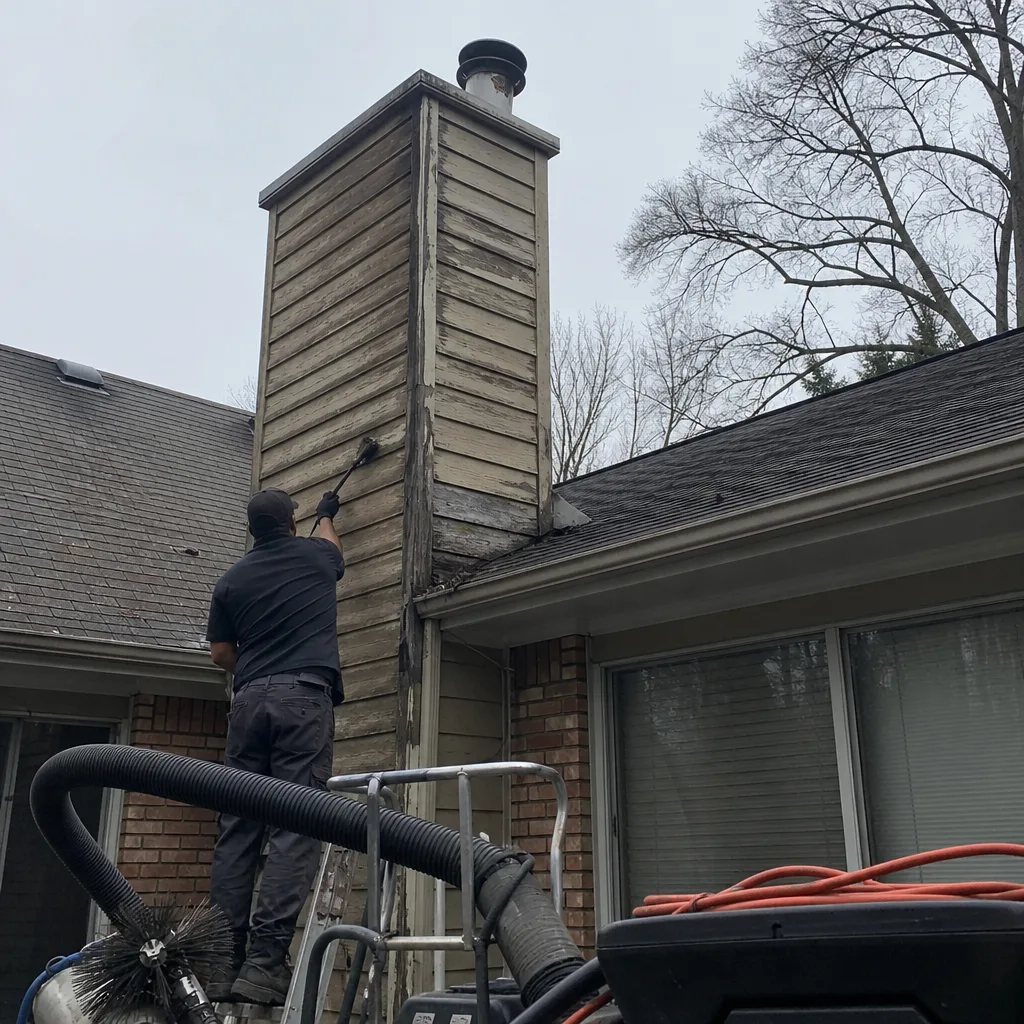 Before
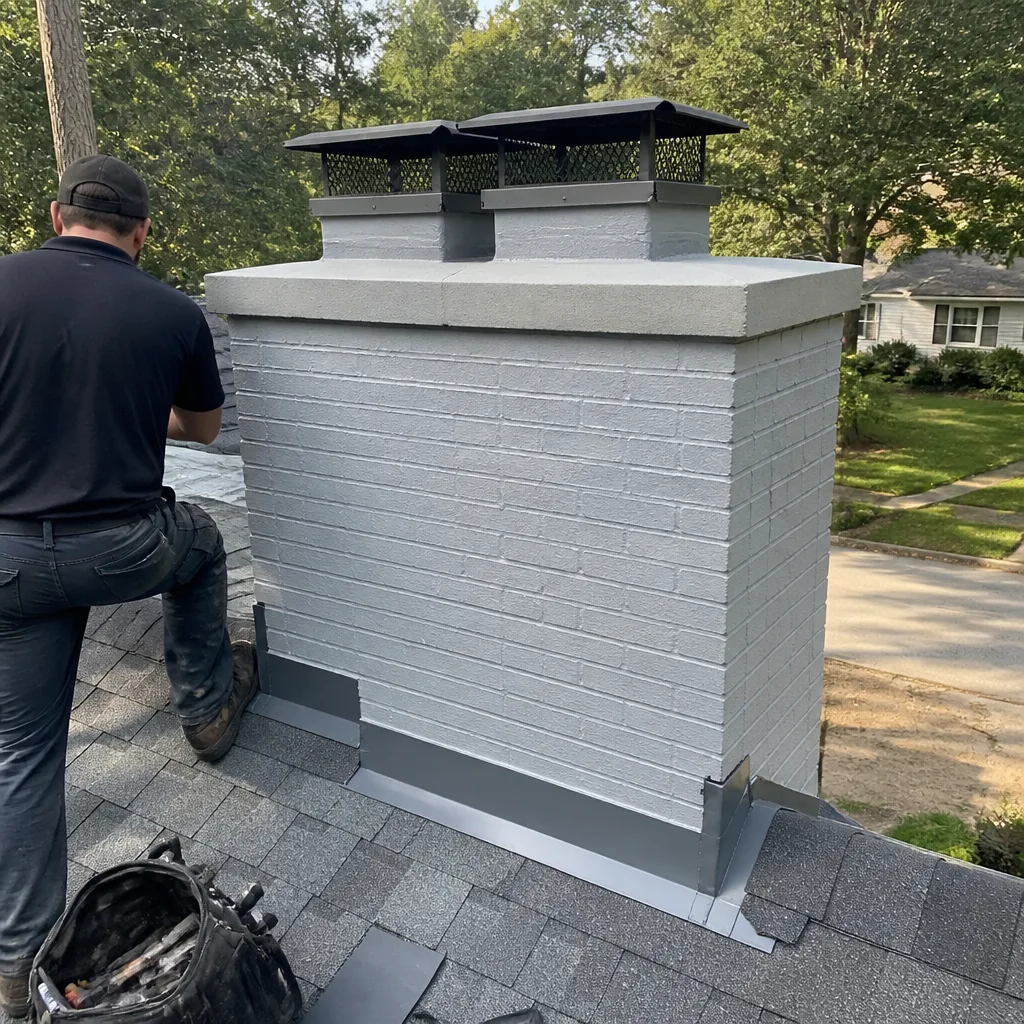 After
After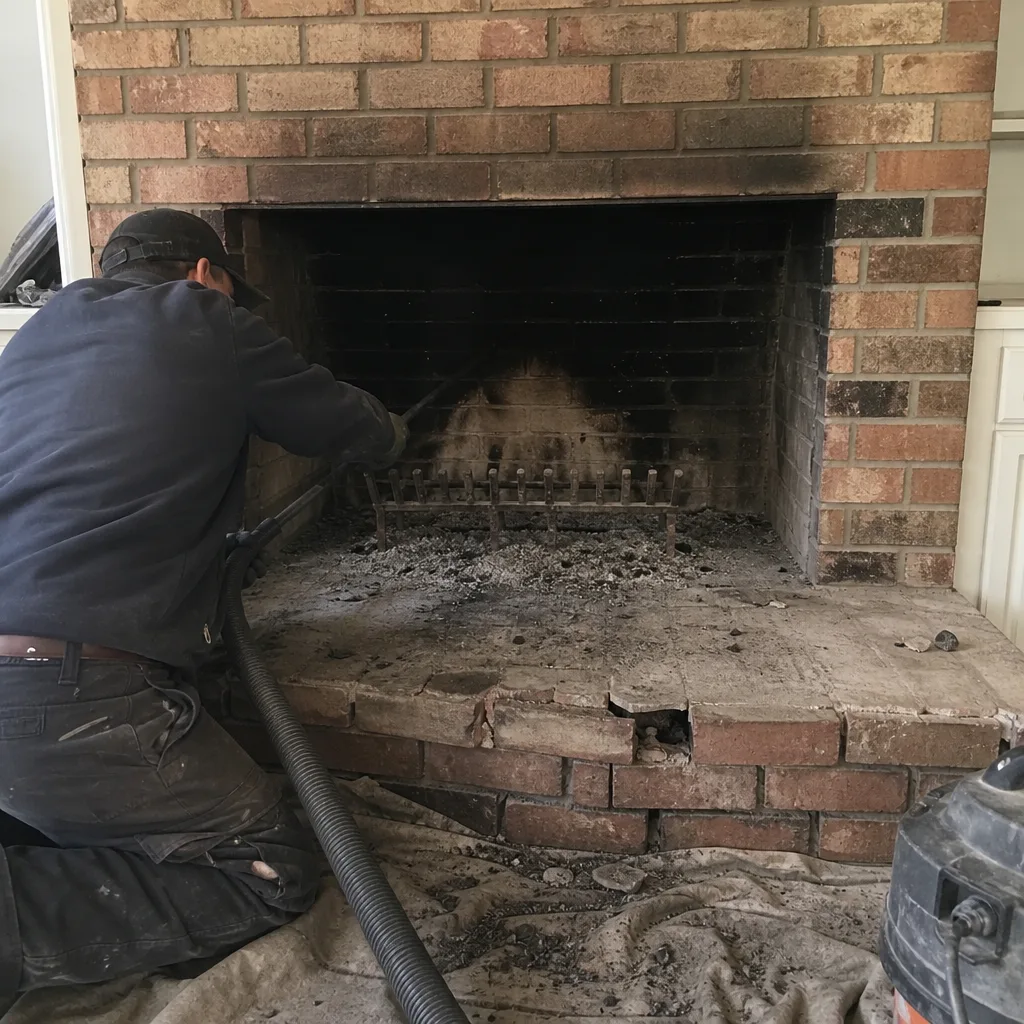 Before
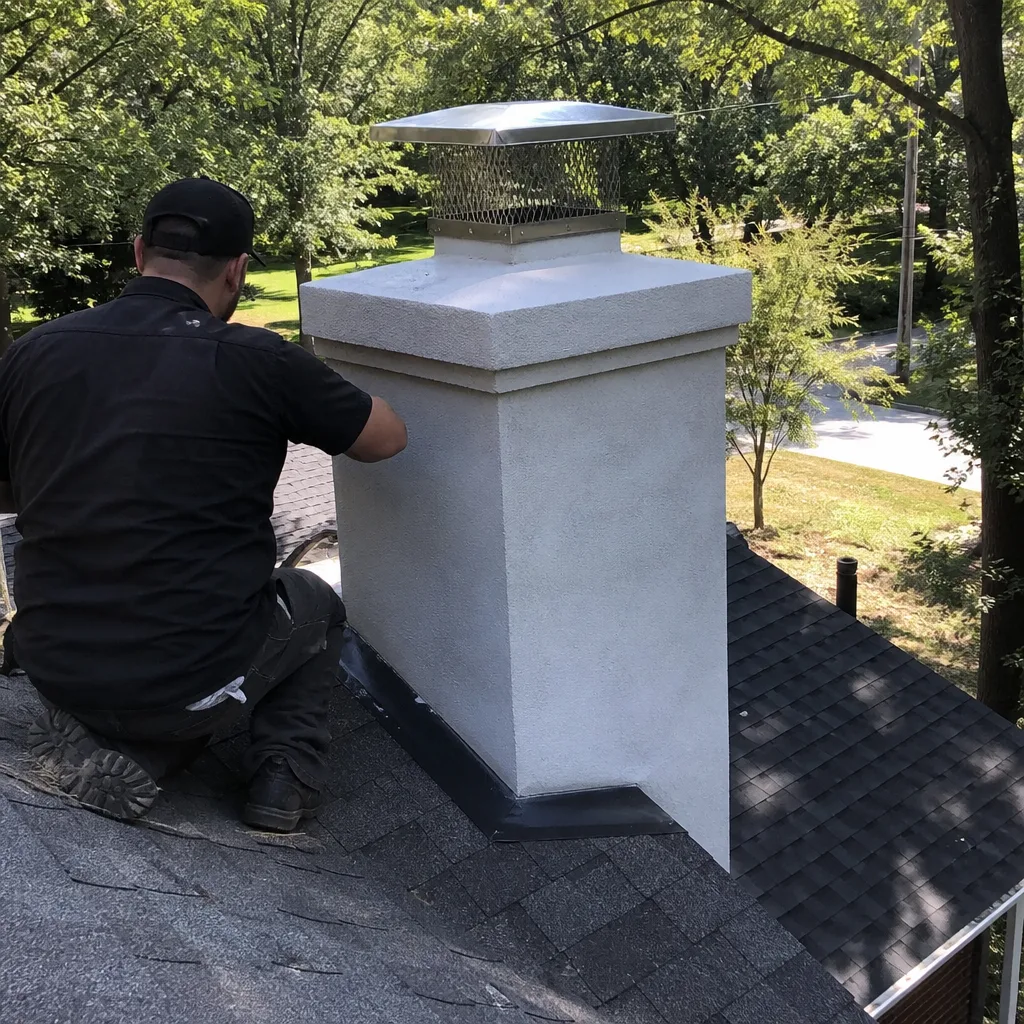 After
After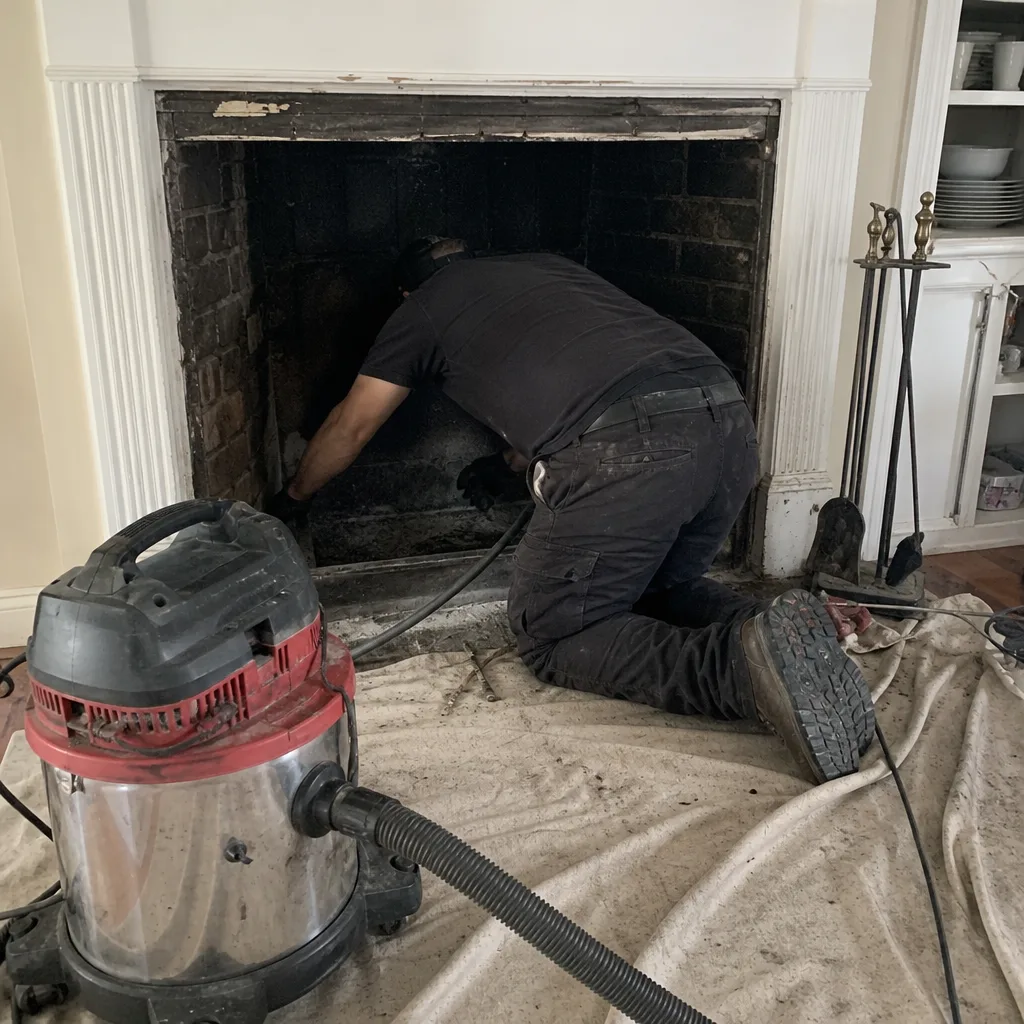 Before
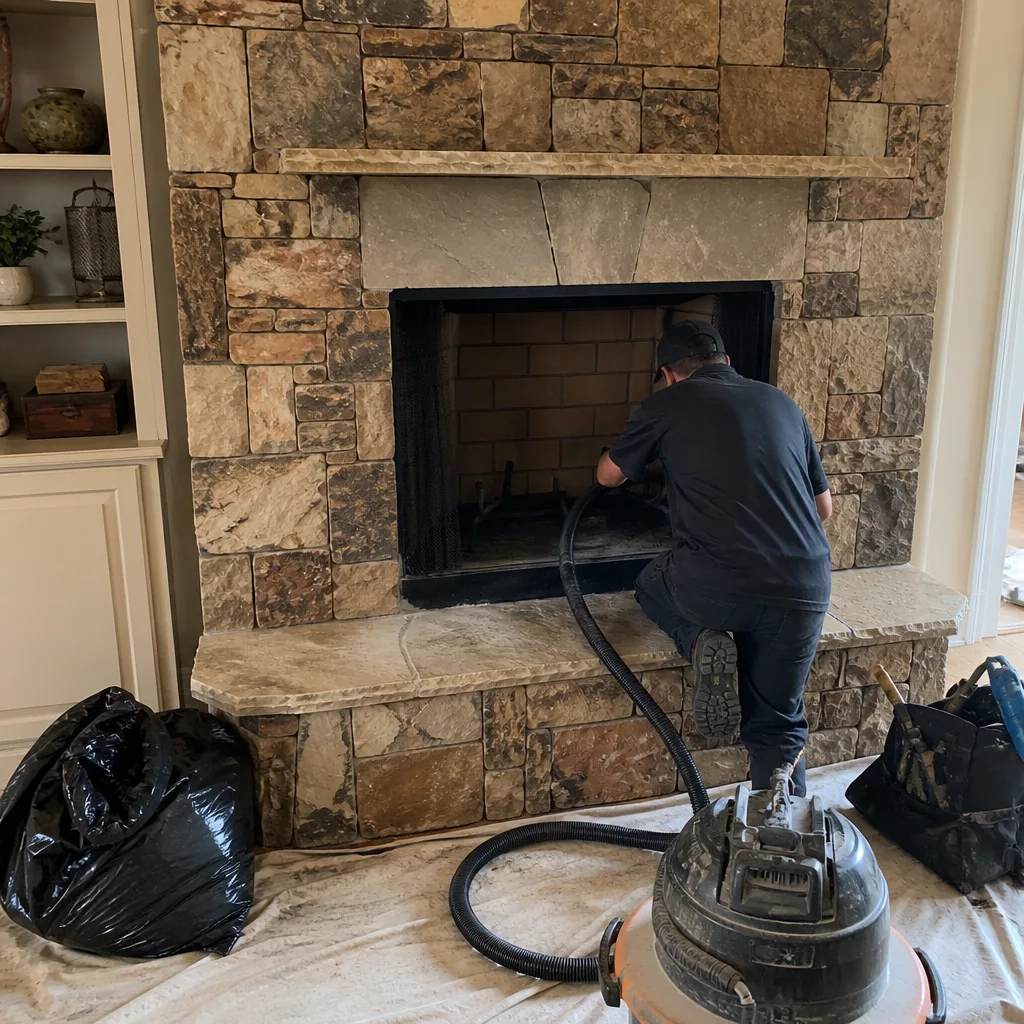 After
AfterWhen to Call a Professional
Call a professional chimney sweep if you have any of the following: visible glaze or shiny black creosote inside the flue, a chimney that has not been cleaned in more than two years, any gas appliance venting through the flue, water staining on the ceiling or walls near the chimney, a chimney cap that is missing or rusted through, a damper that won’t open or close properly, animal sounds or nesting debris in the chimney, or a home you’ve just purchased where the chimney has no documented maintenance history. Any one of these conditions means the narrow DIY scenario does not apply to you. Alcott Chimney Atlanta home offers free estimates throughout metro Atlanta, with a written price before any work begins and a live person answering at (762) 356-6423 any hour of the day or night.
Frequently Asked Questions
A professional chimney sweep in Atlanta typically costs between $180 and $340 for a standard open-flue masonry fireplace, depending on flue size, creosote stage, and roof accessibility. That price includes disposal of removed material and at minimum a Level 1 visual inspection. Alcott Chimney Atlanta provides a written price before any work begins, so there are no surprise charges. Call (762) 356-6423 for an exact quote, which is free.
The National Fire Protection Association recommends an annual inspection and cleaning if creosote accumulation warrants it. In practice, Atlanta’s mild winters and sporadic fireplace usage produce faster creosote buildup than many homeowners expect, especially in exterior masonry chimneys that run colder. A home that burns fires weekly through the season should be swept every 12 months at minimum. Homes with stage 1 creosote and light usage can sometimes go 24 months, but that should be confirmed by inspection, not assumed.
Not necessarily, but a cracked clay tile liner is a legitimate finding that should be verified with a camera before any recommendation is accepted. Small, isolated cracks can sometimes be addressed with a resurfacing product like HeatShield, while extensive separated or spalled tiles often require a full liner replacement with a system like DuraFlex. The key is evidence: any company recommending liner work should show you the damage on video. If they won’t, get a second opinion. Call (762) 356-6423 and we’ll show you exactly what we’re seeing, because you should never buy a liner on faith.
Creosote accumulates in stages, from light soot to flaky tar to a hard, glazed coating that is a serious fire hazard. At the same time, water intrusion often progresses unnoticed through the crown and flashing, causing brick spalling and mortar deterioration. The most common expensive outcome in Atlanta is not a chimney fire, but water damage that requires crown repair, flashing replacement, and sometimes partial rebuild. The second most common is a chimney fire that cracks the liner and requires a full liner replacement. Both are preventable with regular inspection and maintenance.
You can if, and only if, you meet every condition of the narrow DIY scenario: straight flue, stage 1 creosote only, safe roof access, wood-burning fireplace only, no gas appliances sharing the flue, and no visible exterior damage. If you meet all those criteria, a careful DIY sweep with properly sized equipment and HEPA dust containment is a reasonable task. If you’re not certain about any one of those conditions, the safer and typically more cost-effective path is a professional sweep that includes inspection. Call (762) 356-6423 and we’ll help you figure out which situation you’re actually in, even if the honest answer is that you can handle it yourself.
A Level 1 inspection is a visual check of the accessible portions of the chimney, inside and out, performed during a routine sweep. A Level 2 inspection adds video scanning of the entire flue, evaluation of the smoke chamber and attic clearances, and a more detailed report. Level 2 is required by NFPA 211 after a chimney fire, before a property sale, or when the system has changed. Many Atlanta homebuyers request a Level 2 inspection before closing on older intown homes. Alcott includes the video scan as part of our service, so you get Level 2 documentation without having to ask for it as an add-on.
The Bottom Line
The DIY versus professional chimney cleaning debate is not really about cost. It’s about whether you know which situation you’re in, and most Atlanta homeowners don’t until someone with a camera looks at the flue. A $45 brush kit removes loose soot from a straight flue, and in that narrow scenario, it’s a legitimate tool. But the flue is not the whole chimney, and the issues that cause fires and expensive repairs in Atlanta live in the smoke chamber, behind the damper, in the crown and flashing, and inside the liner where only a video scan can see. The professional service is not a premium version of the brush. It is a different category of work: removal plus inspection plus documentation plus accountability. If you’re uncertain, ask. A good chimney company will tell you the truth, show you the evidence, and give you a written price before touching anything. That’s how we’ve done it in Atlanta since 2002, and it’s how we’ll do it for you. Call (762) 356-6423 for a free estimate.
Written by Ruben Castellano, Owner at Alcott Chimney Atlanta, serving Atlanta since 2002.