
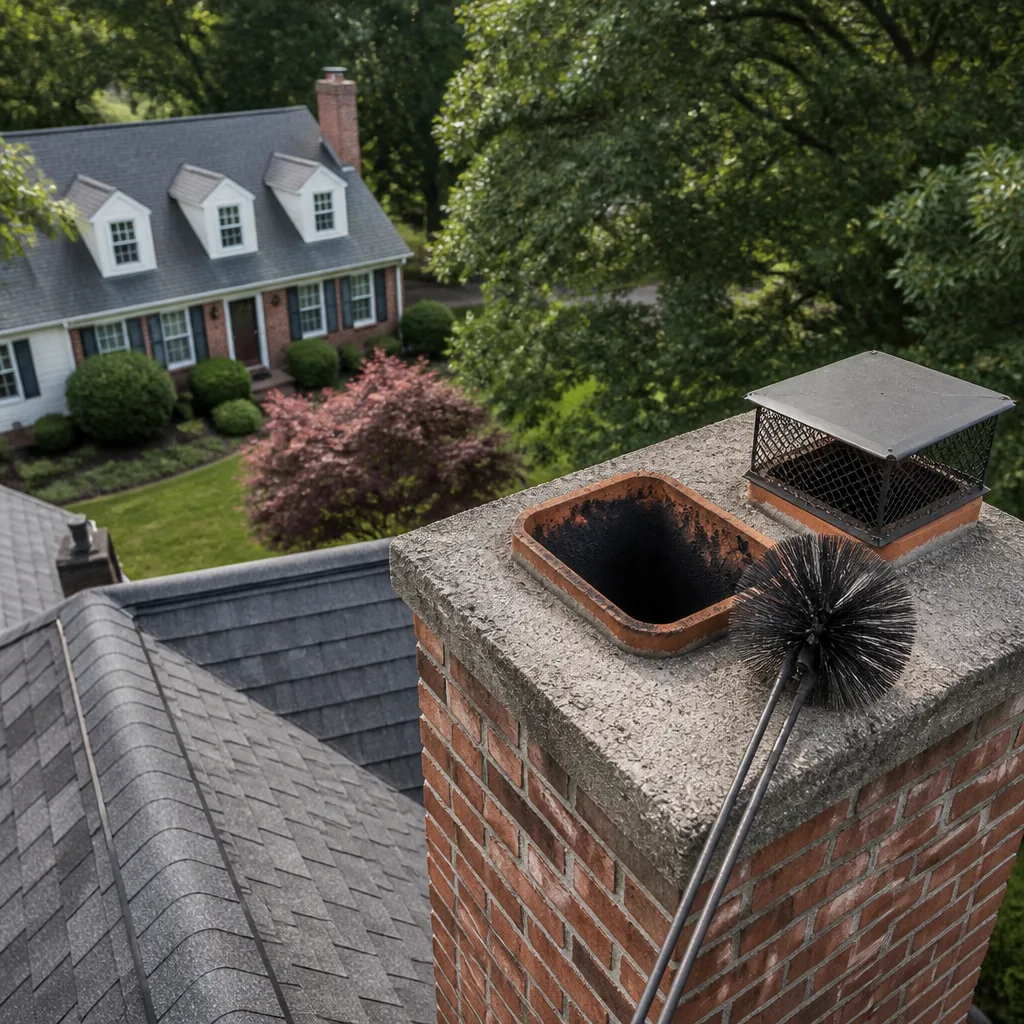
 Sweep & inspection
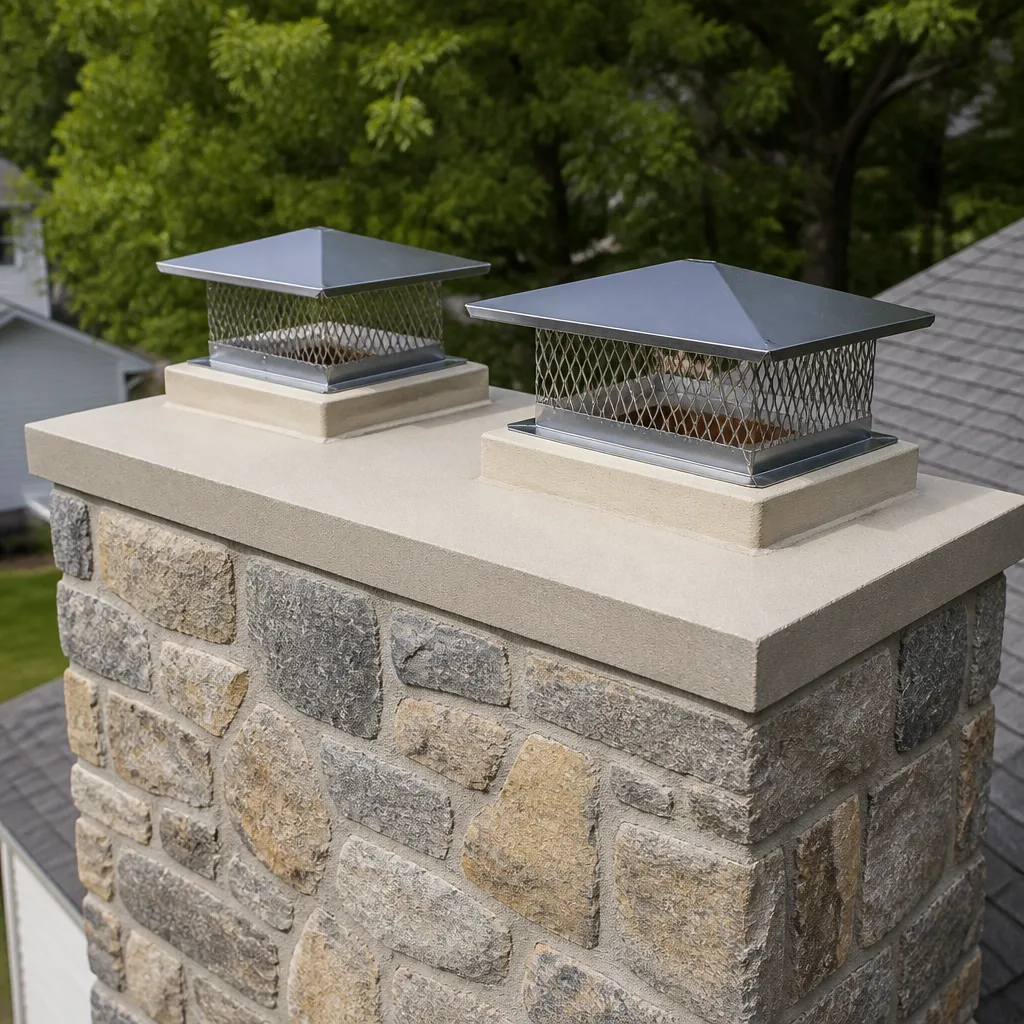 Caps & crowns
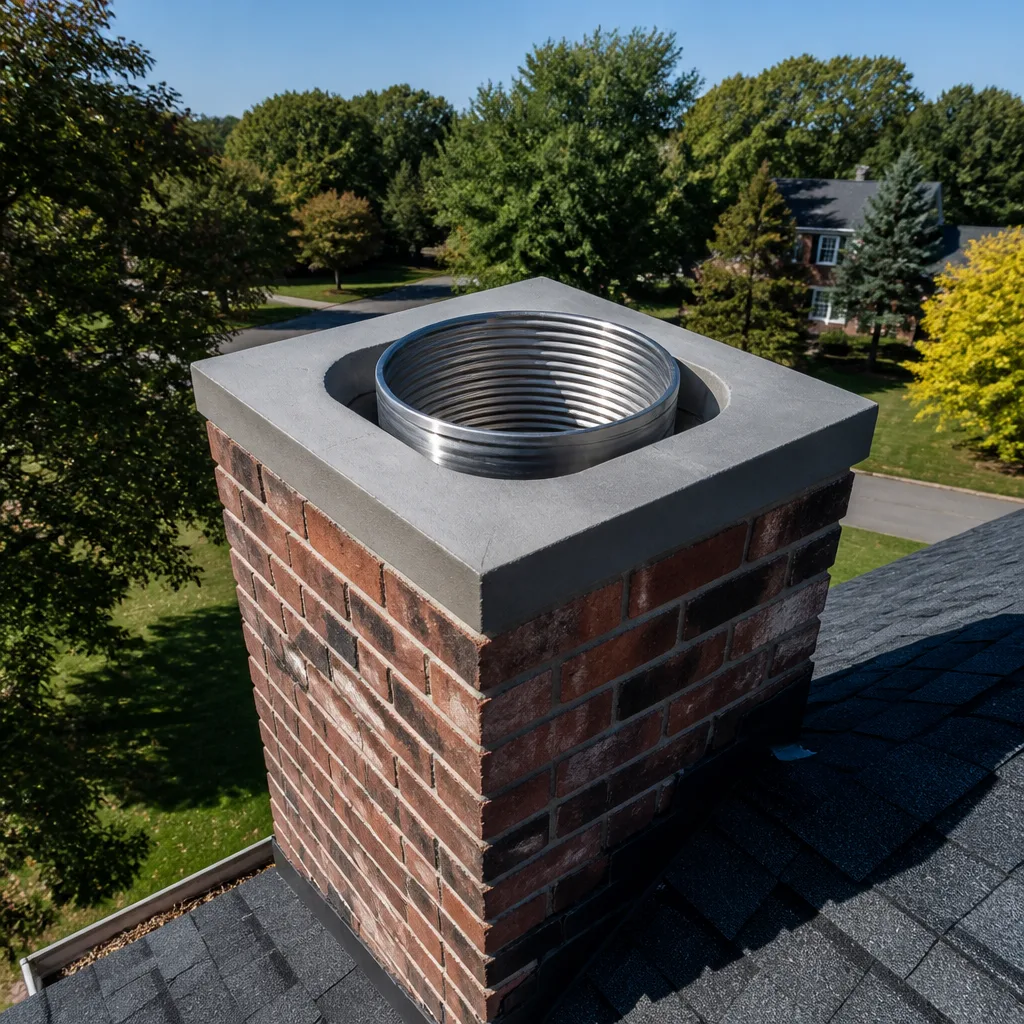 Flue relining
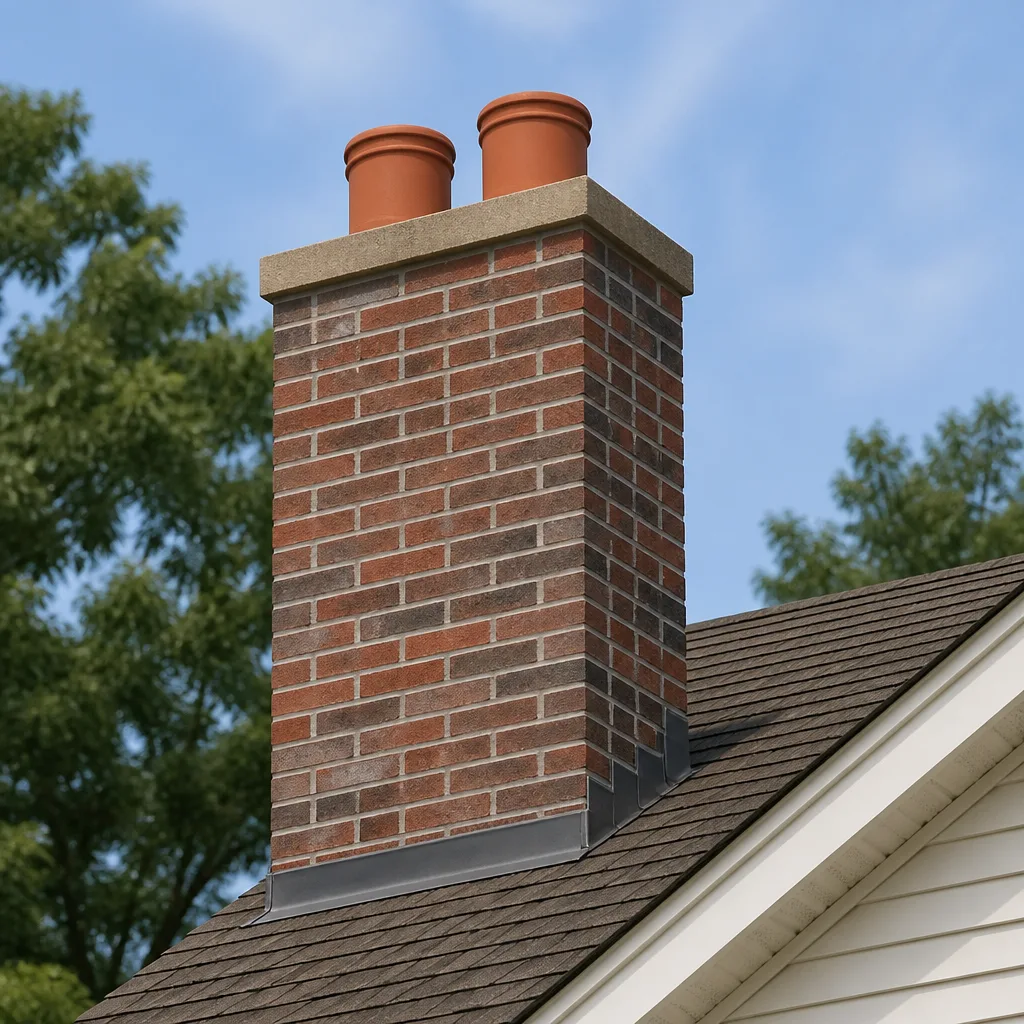 Masonry repair
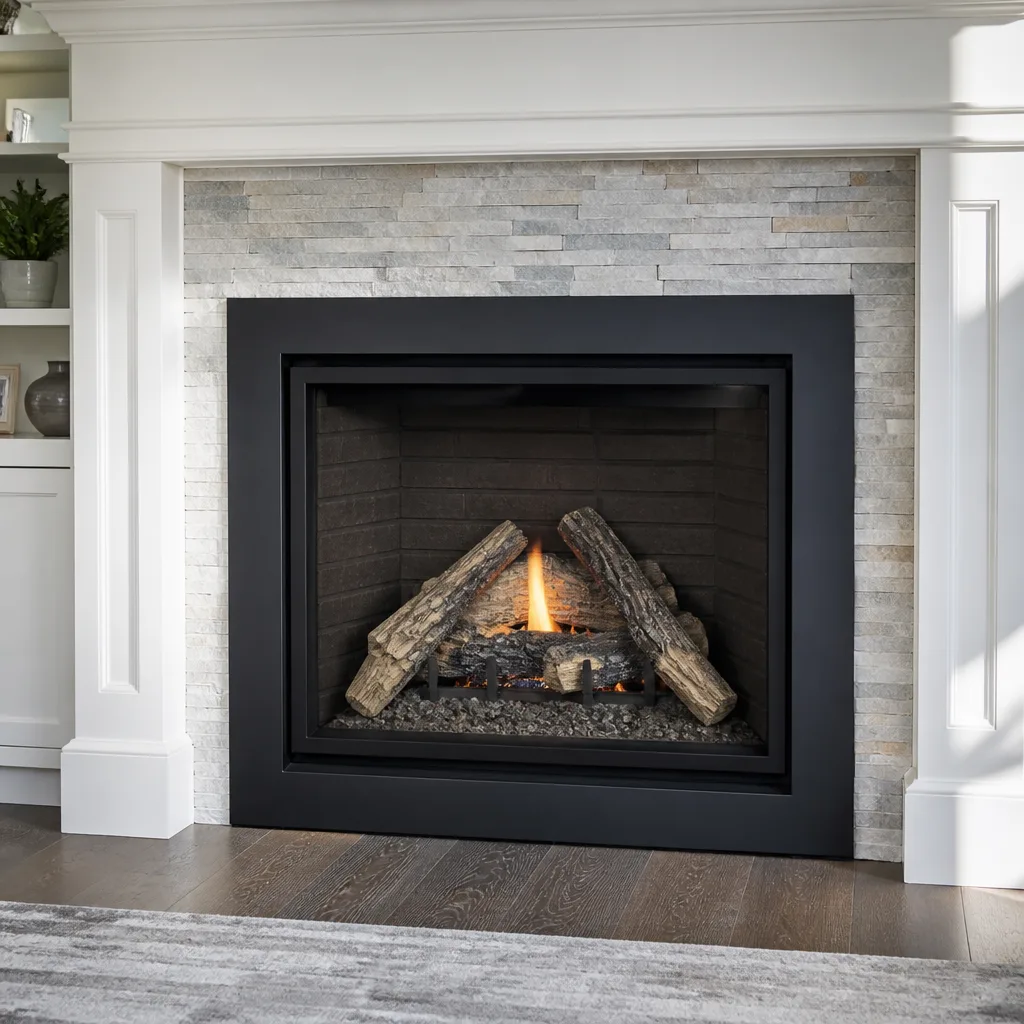 Gas fireplace service
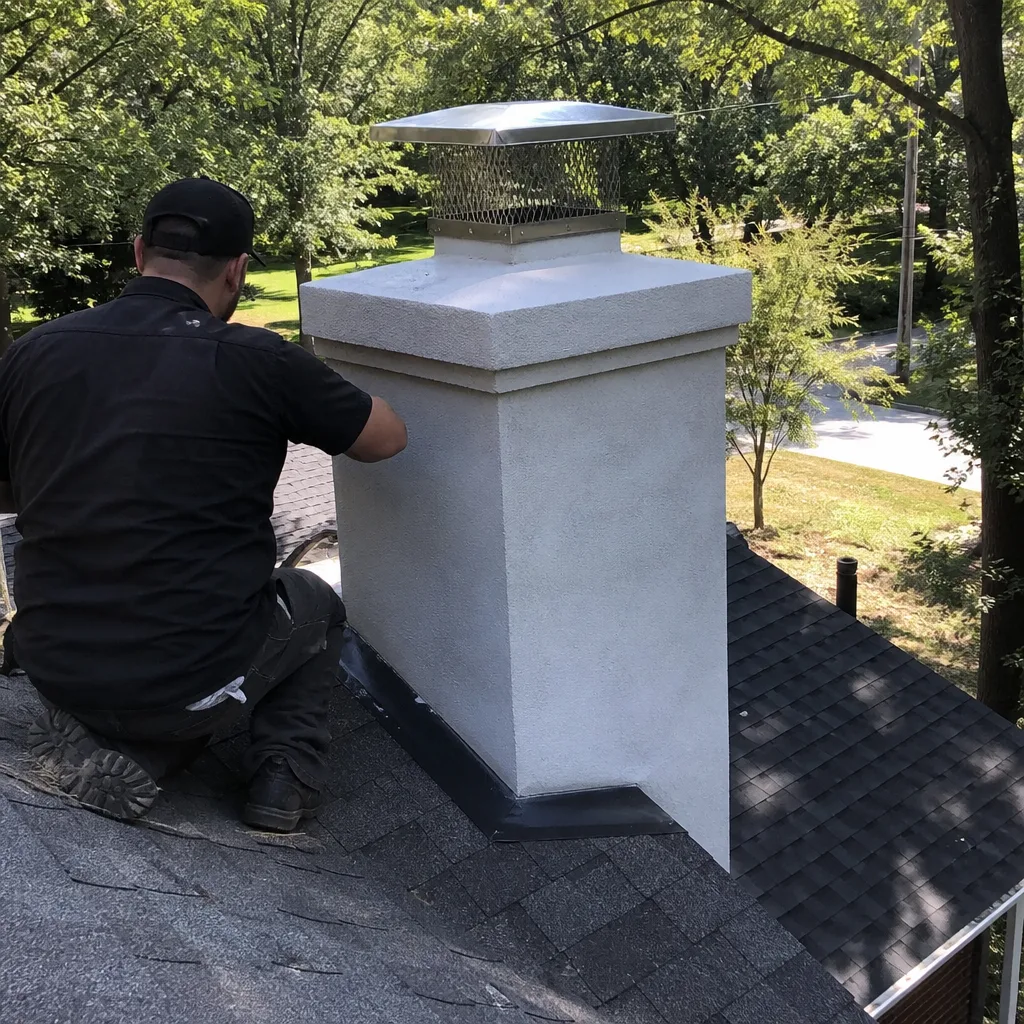
Level 1 sweep and inspection to the NFPA 211 annual standard - flue, crown, cap, and flashing checked and photographed
Chimney sweep logs do not sweep chimneys. They loosen some creosote - which then falls where a brush and vacuum still have to collect it.
Styles & brands we work with
See the difference
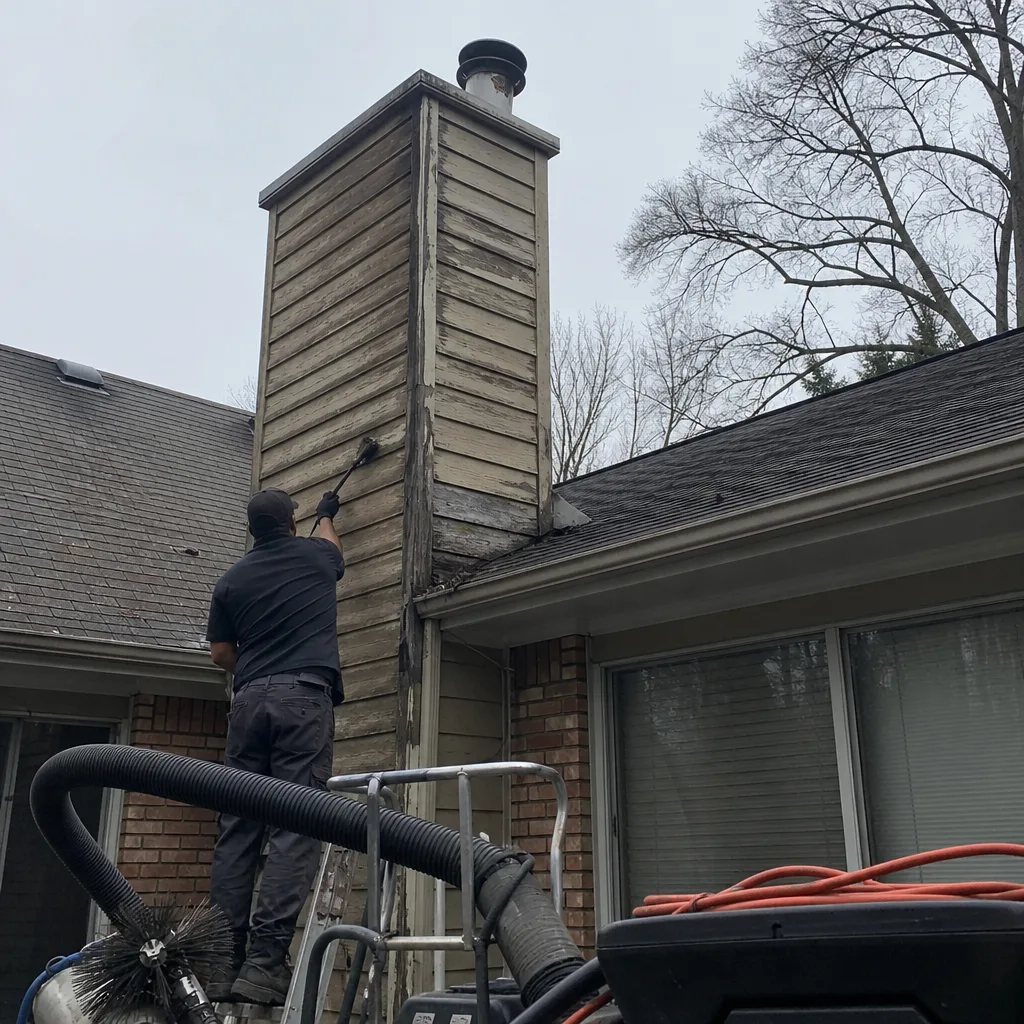 Before
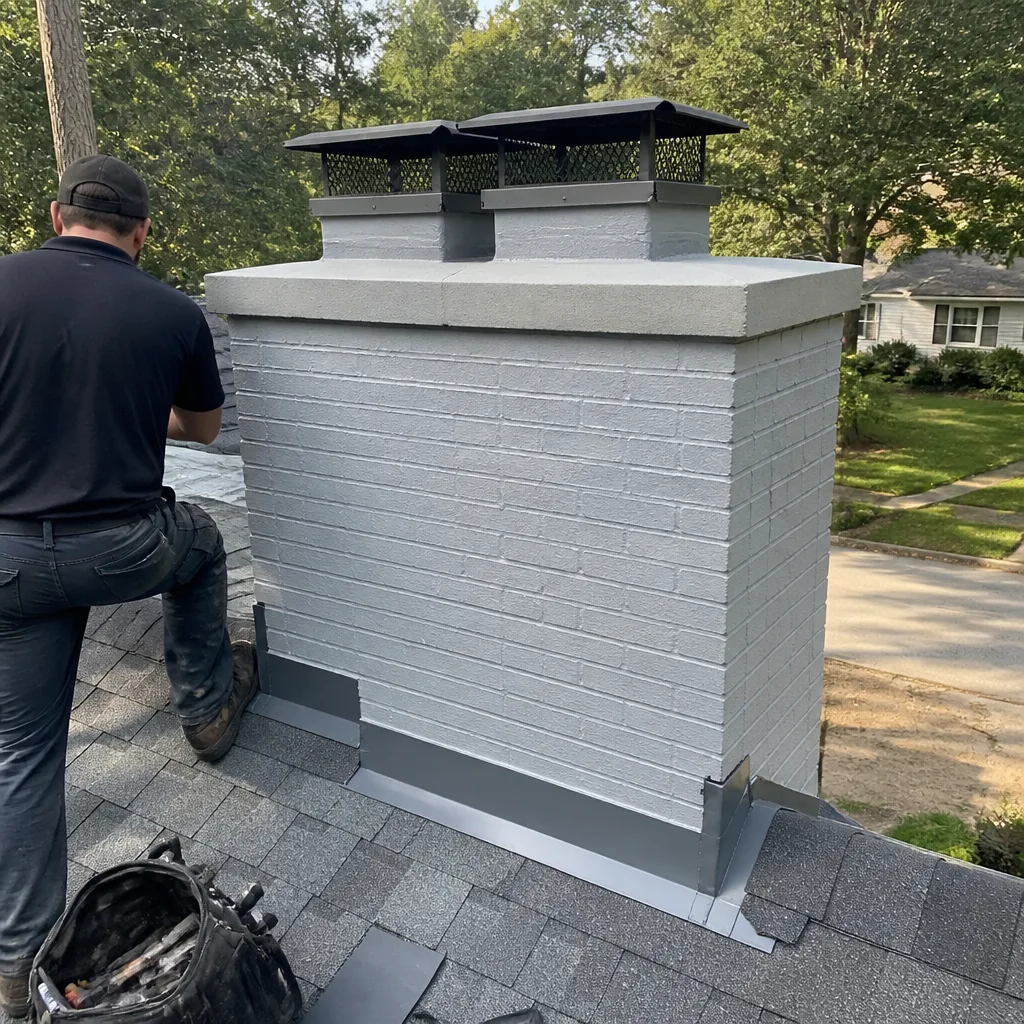 After
After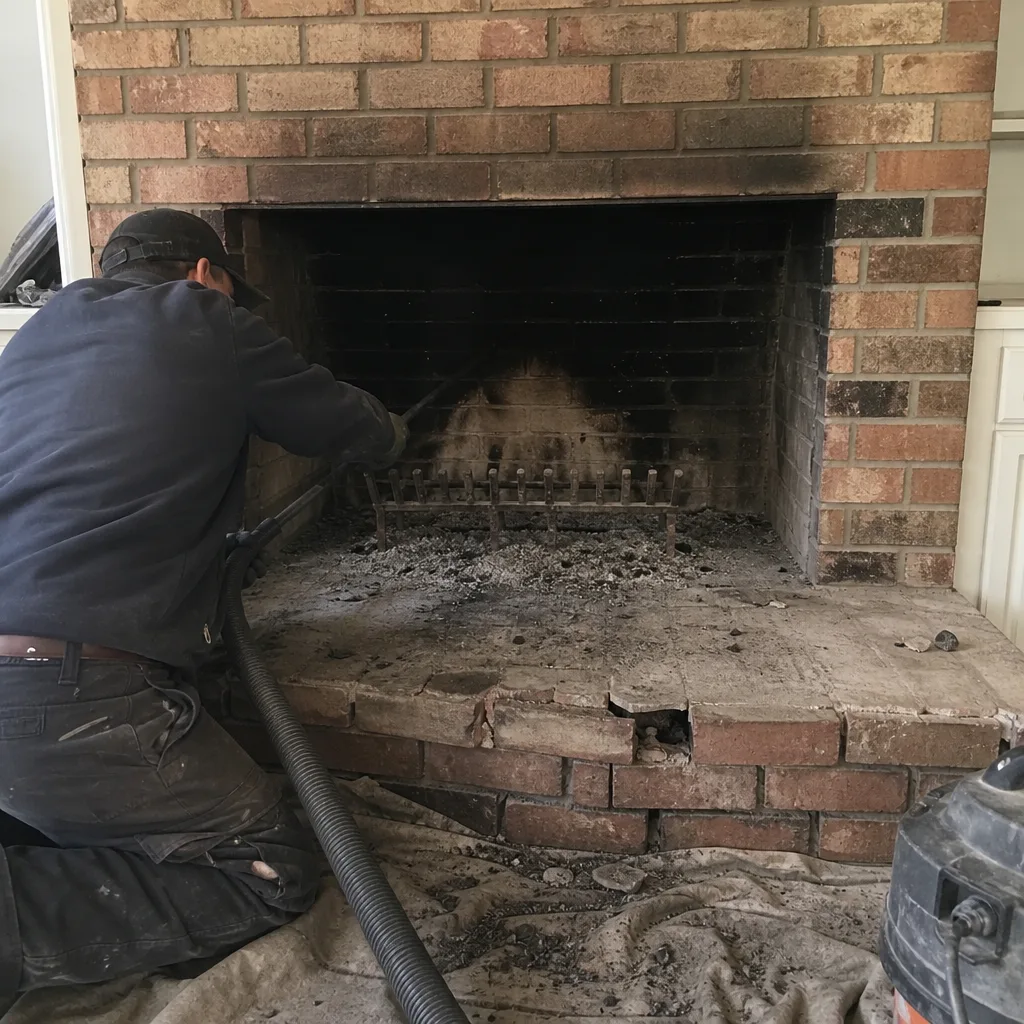 Before
 After
After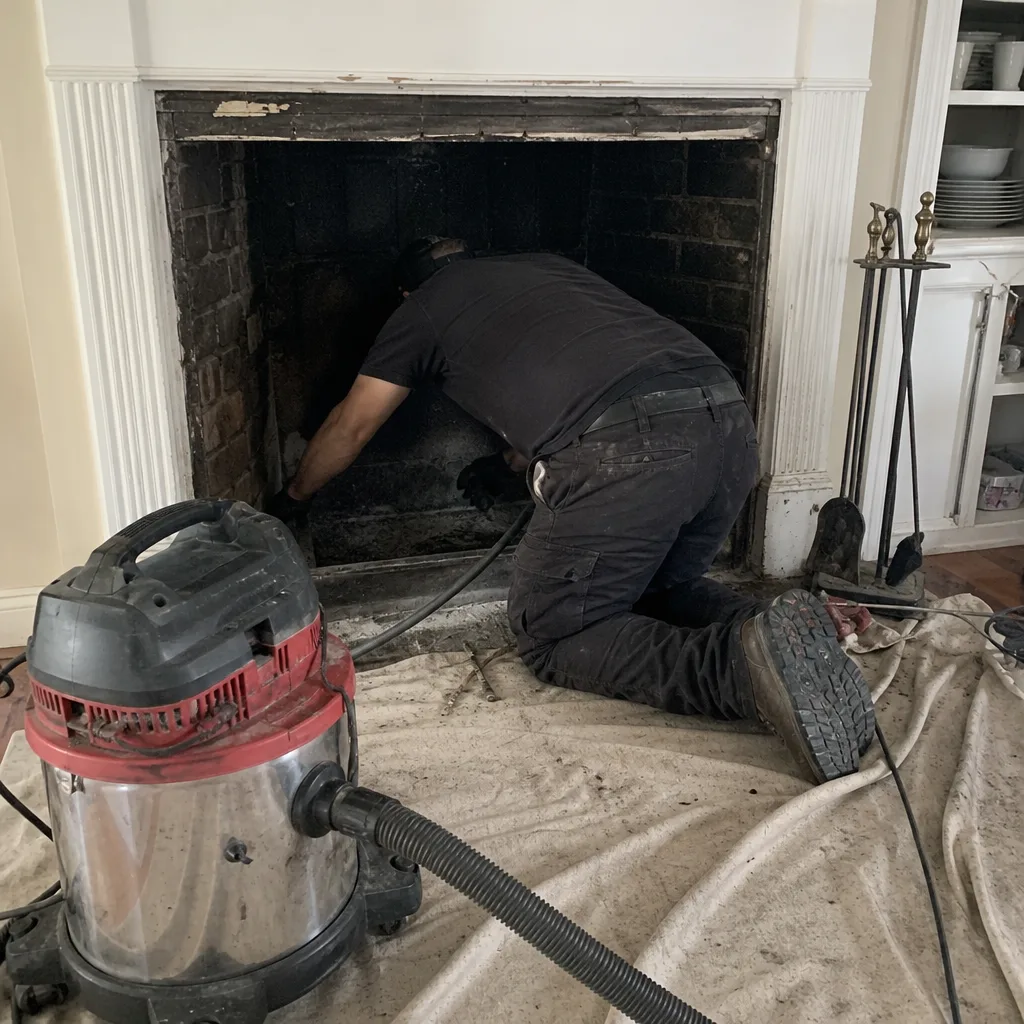 Before
 After
AfterSoot Removal in Atlanta, GA
Soot removal in Atlanta typically costs between $180 and $420 when done as part of a professional chimney cleaning, and most jobs are completed in under two hours. It’s the process of removing the fine black powder that coats your firebox, damper, smoke chamber, and flue walls after burning wood or gas. At Alcott Chimney Atlanta, we’ve handled soot buildup in every corner of the metro area since 2002, from historic bungalows in Grant Park to newer builds in Sandy Springs, and we do it with a written price in your hand before any work starts.
Soot might look like a minor cosmetic issue, but it’s actually the first sign that your chimney isn’t venting the way it should. Left alone, it becomes a fire hazard, corrodes masonry, and can push carbon monoxide back into your living room. If you’re seeing black residue around your fireplace, call us at (762) 356-6423 and we’ll send a background-checked, identity-verified technician to take a look. You’ll know the technician’s name and see their photo before we arrive. That’s the Threshold Standard, and it’s how we’ve operated for over two decades.
This page covers everything about soot removal as part of our broader Chimney Cleaning & Sweep in Atlanta service. You can also jump back to the home page for a full list of services.
When You Need Soot Removal
Soot doesn’t always announce itself with a chimney fire or a smoke-filled room. More often, it builds up quietly over months of use. Here are the specific signs we hear about from Atlanta homeowners before they call us:
- Black dust on the mantel or hearth. If you wipe a white cloth across the fireplace opening and it comes away black, soot is migrating out of the firebox. This is especially common in Atlanta’s older homes where flue sizing was never updated for newer, hotter-burning inserts.
- A campfire smell that lingers even when the fireplace is cold. Soot absorbs moisture from Atlanta’s humid air and releases that smoky odor year-round. In neighborhoods like Virginia-Highland and Decatur, where summer humidity sits above 70%, the smell often gets worse in July and August, not December.
- Visible black coating on the damper or smoke shelf. Shine a flashlight up past the damper. If you see a velvet-black layer more than 1/8 inch thick, that’s enough to restrict airflow and needs professional removal.
- Smoke rolls back into the room when you light a fire. Thick soot narrows the flue passage, reducing draft. In Midtown condos and townhomes, where flues are already shorter than single-family chimneys, this happens faster than homeowners expect.
- You just moved in and don’t know the chimney’s history. Metro Atlanta has thousands of homes built before 1980 with unlined or under-maintained chimneys. If the previous owner can’t show records of a recent sweep, assume soot has accumulated and get it checked.
- You burn green or unseasoned wood. Georgia’s wet winters mean firewood sold at gas stations and grocery stores is often improperly seasoned. Burning it produces excessive soot even in a well-functioning fireplace.
Our Soot Removal Process
Every soot removal job at Alcott Chimney Atlanta follows the same sequence. No skipped steps, no shortcuts, and you’ll see exactly what we see through photos before and after the work.
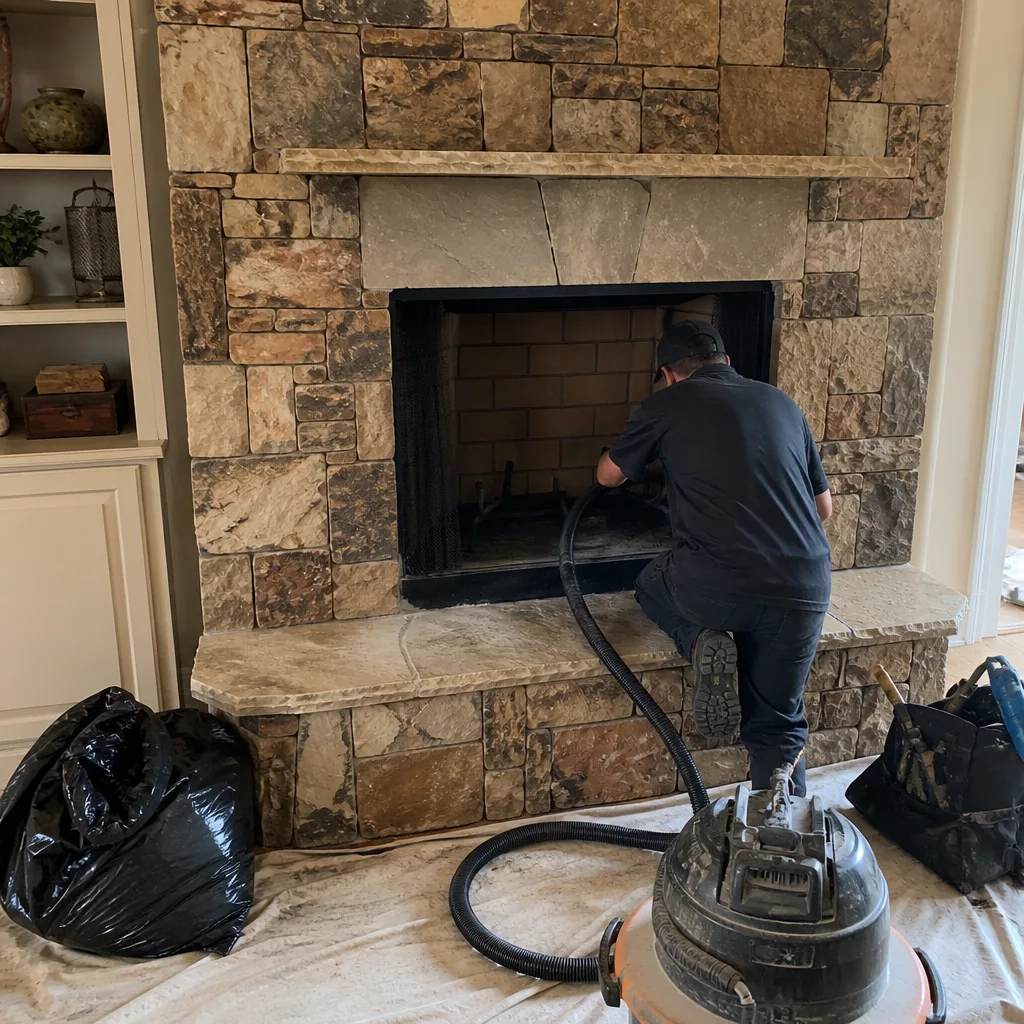
- Protect the room first. We lay drop cloths across the hearth and a few feet into the room, then set up our HEPA-filtered vacuum to run throughout the job. Soot is fine enough to float through the air and stain curtains and upholstery, so containment comes before anything else.
- Inspect the firebox and flue. Before we touch anything, we document the soot level, check for underlying damage like cracked flue tiles or deteriorated mortar joints, and confirm the damper opens and closes properly. Ruben Castellano’s technicians take photos you’ll be able to review.
- Run the rotary brush system through the full flue. We use professional rotary and whip systems sized to your exact flue dimensions, which dislodge soot and creosote, the tar-like buildup that causes chimney fires, without damaging the liner. For Atlanta’s many older chimneys with clay tile liners, we adjust the brush type and speed to avoid chipping.
- Clean the smoke chamber, smoke shelf, and firebox by hand. These areas are where soot accumulates most heavily in the Southeast, partly because our mild winters mean fires burn low and cool, producing more incomplete combustion. We scrape and vacuum every accessible surface, then wipe down the firebox walls.
- Remove the soot and debris with a HEPA vacuum. Everything we dislodge is captured and carried out in sealed bags. You won’t find soot dust on your furniture the next morning.
- Verify the draft and walk you through what we found. We test airflow, confirm the damper operates smoothly, and show you before-and-after photos. If we spot damage that needs repair, you’ll get a written quote with trade-brand materials specified by name before any additional work proceeds.
Soot Removal Pricing in Atlanta
Soot removal alone, without a full chimney sweep, typically runs $120 to $200. As part of a complete chimney cleaning, which includes flue brushing, smoke chamber cleaning, and firebox soot removal, Atlanta homeowners pay between $180 and $350 for a standard single-flue fireplace. Here’s what shapes the final number:
- Flue height and chimney access. Two-story homes in Brookhaven and Buckhead generally cost more than single-story ranches in East Point, purely because of the extra ladder work and hose length required.
- Severity of soot buildup. Light dusting adds little time. Heavy glazed soot, the kind we see in homes that burn unseasoned pine or haven’t been cleaned in five-plus years, takes longer and may require chemical treatment to break down.
- Liner condition. If soot has been sitting on a cracked clay liner, removal may reveal damage that needs a separate repair quote. We’ll never start that work without a written price in your hand.
- Additional appliances. Gas log sets, wood stoves, and inserts each add $50 to $100 for their own soot and carbon clearing.
| Service | Typical Price Range |
|---|---|
| Soot removal only (firebox and damper) | $120 – $200 |
| Full chimney sweep including soot removal | $180 – $350 |
| Gas fireplace soot and carbon clearing | $150 – $275 |
| Glazed soot chemical treatment (add-on) | $75 – $150 |
Your price is locked in before we pick up a tool. That’s not a courtesy; it’s how Alcott Chimney Atlanta has worked since 2002. Every job includes a written guarantee on any repair we perform, and if a repair fails within the coverage period, the second visit is free. Call (762) 356-6423 for a free estimate, and a live person will answer, any hour, any day.
Soot vs. Creosote: What Atlanta Homeowners Should Know
Soot and creosote are not the same thing, and knowing the difference matters when you’re looking at a quote. Soot is the soft, powdery carbon residue left behind when wood or gas doesn’t burn completely. It’s mostly carbon and ash, and it brushes away relatively easily. Creosote, on the other hand, is the hard, tar-like substance that condenses from wood smoke as it cools inside the flue. In Atlanta, where winter temperatures swing from the 50s by day to the 30s at night, smoke cools quickly in masonry chimneys, accelerating creosote formation.
Creosote exists in three stages: Stage 1 is flaky and brushable, Stage 2 is a hardened crust that requires rotary tools, and Stage 3 is a thick, shiny glaze that often needs chemical treatment or liner replacement. Here’s what that means for your wallet: if a chimney has Stage 3 creosote hiding underneath surface soot, a standard sweep won’t fully address it. We regularly find this in Atlanta homes built in the 1950s and 1960s where decades of fires preceded current owners. When that happens, we show you the photos, explain what you’re looking at, and quote a solution using materials like HeatShield or Famco – the professional trade brands we stock and install, never box-store substitutes.
The quick takeaway: if your chimney has been neglected for several seasons, plan for a creosote inspection as part of your soot removal. It’s the difference between a $200 cleaning and a $2,000 liner repair that’s actually cheaper than waiting for a chimney fire.
How Atlanta’s Climate and Firewood Habits Affect Soot
Metro Atlanta’s specific weather patterns make soot buildup worse than what you’d see in drier climates. Our relative humidity averages 68% year-round, and that moisture binds with soot particles, causing them to stick to flue walls instead of falling to the smoke shelf. In neighborhoods near the Chattahoochee, like Vinings and Sandy Springs, the river-valley humidity compounds this effect. Soot that would remain dry and brushable in Phoenix becomes tacky and tenacious here.
Firewood choices compound the problem. The Georgia Forestry Commission logs show that most firewood sold in the Atlanta metro is oak and hickory, but much of it is not properly seasoned to the 20% moisture content you want. Homeowners who burn this green wood, especially in open fireplaces rather than high-efficiency inserts, produce heavy smoke, which means heavy soot. If you buy firewood from a roadside seller in Cobb County or along Highway 78 toward Stone Mountain, check it with a moisture meter before burning. Wood above 25% moisture is the single biggest contributor to rapid soot accumulation in Atlanta fireplaces.
We’ve also noticed a pattern with Atlanta’s many 1920s-1940s bungalows. Those chimneys were built for coal or early wood stoves with wider flues than modern fireplaces need. When a modern fireplace insert vents into an oversized flue, smoke lingers longer, cools faster, and deposits more soot. The fix isn’t always a liner replacement; sometimes it’s a properly sized liner from Olympia Chimney or DuraFlex, installed to match your current appliance. The key is having someone actually look at the flue dimensions before recommending a fix.
Gas Fireplaces Need Soot Removal Too
There’s a common belief in Atlanta that gas fireplaces don’t produce soot. That’s incorrect. Gas logs produce a lighter, grayish-white soot that settles on the logs, firebox walls, and inside the venting. If you have an unvented gas log set, which is legal in Georgia for certain installations, you’ll see soot accumulate faster because the combustion byproducts stay in the room.
We service vented and unvented gas units throughout the metro area, and here’s what we tell every gas fireplace owner: if your flame burns with noticeable yellow tipping instead of a clean blue flame, excess soot is being produced. This usually means the burner ports are partially clogged or the air-to-fuel mixture is off. Regular cleaning extends the life of the log set and prevents the blackened glass that shows up on many direct-vent units in Dunwoody and Alpharetta homes.
Our gas fireplace soot removal includes removing the logs, vacuuming the burner and controls, cleaning the pilot assembly, and wiping down the firebox. We use manufacturer-specified cleaners appropriate for Gelco and Famco components, not generic spray cleaners that can leave residue and create odors when the fireplace heats up.
Why Choose Alcott Chimney Atlanta for Soot Removal
Most chimney companies in Atlanta can run a brush through a flue. What separates us is everything that happens before and after the brush work, and we’re straightforward about both.
First, you’ll never open your door to a stranger. Every Alcott technician passes a background check and identity verification before ever stepping on your property. We send you the technician’s name and photo ahead of the visit, and they carry a photo ID badge they’re required to show at the door. If the person who arrives doesn’t match the photo you received, don’t let them in and call us immediately. This is the Threshold Standard, and Ruben Castellano knows it matters to parents with young kids, older homeowners, and anyone who’s uneasy about letting a contractor into their home. We’ve built our entire company around that certainty.
Second, our pricing never surprises you. Every soot removal job comes with a written price before we begin, and that number doesn’t change unless you approve additional work in writing. No add-ons, no “we found something” phone calls that triple the bill.
Third, we back everything with a written guarantee on every repair. The 365-Day Done Right Promise means a full year of accountability on every completed job. If a repair we performed fails within that year, we return and make it right at no charge. No fine print, no prorated nonsense.
And if you call us at (762) 356-6423, a live person answers. Not a voicemail system, not a call center. At 2 p.m. or 2 a.m., when you smell smoke or see soot falling into your living room, you’ll reach someone who can schedule a technician. That matters more in Atlanta than most places, where winter fires burn at erratic hours and problems rarely announce themselves on a schedule.
How Much Soot Is Dangerous?
The National Fire Protection Association recommends a chimney inspection when soot deposits reach 1/8 inch thickness anywhere in the flue system. That’s about the thickness of two stacked quarters. If you can scrape soot from the firebox wall with a butter knife and it comes off in clumps rather than dust, you’re past that threshold. At that point, the soot is both a fire risk and a sign of an underlying drafting problem.
What makes soot dangerous isn’t just flammability. Soot is acidic. In Atlanta’s humid environment, soot absorbs moisture and forms a mild acid that eats away at mortar joints and brick over time. We’ve inspected chimneys in Kirkwood and East Atlanta where years of untouched soot left mortar joints deeply eroded, requiring repointing that could have been avoided with routine cleaning. A $250 soot removal every couple of years is cheap insurance compared to a $1,500 masonry repair.
And don’t underestimate the air quality angle. Soot that migrates into the living space contributes to indoor particulate levels that can aggravate asthma and allergies. We hear this from parents in Decatur and Tucker whose kids struggle with respiratory issues. Once the chimney is properly cleaned and the airflow corrected, the indoor air feels noticeably different. But that cleanup work itself should always be handled by a trained professional, with containment and HEPA filtration, rather than a DIY weekend project that spreads fine soot throughout the house.
FAQs – Soot Removal
How much does soot removal cost in Atlanta?
Soot removal in Atlanta costs between $120 and $200 as a standalone service, or $180 to $350 as part of a complete chimney sweep that includes flue brushing and smoke chamber cleaning. Factors like chimney height, soot severity, and whether you have gas or wood appliances affect the final price. Call (762) 356-6423 for a free estimate with a written price before any work starts.
Can you remove soot from a chimney the same day?
Yes, in most cases we can remove soot from your chimney the same day you call, especially if you contact us in the morning or early afternoon. Our technicians carry full equipment on every truck, so once they arrive in neighborhoods like Buckhead, Marietta, or Roswell, the job typically takes one to three hours from setup to final walkthrough. For emergency situations, a live person answers at (762) 356-6423 around the clock.
Is soot removal the same as a chimney sweep?
No, soot removal is one part of a full chimney sweep, but not the whole job. A complete sweep removes soot, creosote, and blockages from the entire flue system, including the smoke chamber and the area above the damper that you can’t see from the firebox. If you only clean visible soot but ignore the flue, you’re addressing the symptom while leaving the actual fire hazard untouched. Most Atlanta homeowners need the full sweep every one to two years depending on burn frequency.
Do gas fireplaces need soot removal?
Yes, gas fireplaces accumulate a fine gray or white soot on logs, glass, and firebox walls, and it should be removed annually in homes that use the fireplace regularly. If you notice a yellow-tipped flame or blackened glass on a direct-vent unit, soot is building up faster than normal, and a cleaning can restore both appearance and function. We service gas log sets throughout the Atlanta metro area and include soot removal as part of gas fireplace maintenance. Call (762) 356-6423 for an exact quote; estimates are free.
What to Do Between Professional Soot Removals
We don’t expect you to call us every time a few specks of soot appear on the hearth. Between professional cleanings, there are simple things you can do to keep soot from becoming a bigger problem. Burn only seasoned hardwood with a moisture content below 20%. Keep your damper fully open during fires and for at least an hour afterward. Don’t burn wrapping paper, cardboard, or construction scraps, which create dense, heavy smoke. And once a month during burn season, wipe down the firebox with a damp cloth (after it’s completely cooled) to track how quickly soot is accumulating.
If you notice soot building faster than before, or you smell smoke when the fireplace isn’t in use, that’s a signal to call us before the problem compounds. The team at Alcott Chimney Atlanta has been handling Atlanta’s fireplace and chimney needs since 2002, and we’d rather catch a minor soot issue early than watch it become a liner replacement, a masonry repair, or a house fire. That’s the whole point of what we do: clean the flue, fix what’s broken, and give you a written guarantee that stands behind the work.
Contact Alcott Chimney Atlanta for Soot Removal
Ready to get your chimney soot-free? Call (762) 356-6423 now and speak with a live person. We’ll schedule a background-checked, identity-verified technician at a time that works for you, send their name and photo before arrival, and put a written price in your hand before any work begins. Every repair is backed by our written guarantee, and if it fails within the coverage period, we come back free. That’s the Chimney Cleaning & Sweep in Atlanta service homeowners have trusted for over 20 years.
Written by Ruben Castellano, Owner at Alcott Chimney Atlanta, serving Atlanta.